
Protecting Madagascar’s Remaining Dry Forests: Save Kasijy Special Reserve!

DONATE TO IMPACT MADAGASCAR Verified for authenticity Learn More IMPACT PROMISE Our Partners are carefully selected due to their high conservation impact Partner Snapshot Partner Name IMPACT Madagascar Location: Kajisy Special Reserve, located between the Betsiboka and Boeny regions of north-western Madagascar. Classified as a Key Biodiveresity Area (KBA), this threatened forest ecosystem is home to a number of endangered and vulnerable species. In addition, Kajisy is home to 67 species of birds, 4 additional species of lemurs, over 20 reptile species and 5 amphibians. Appeal Category: Community Support and Development Ecosystem Restoration Wildlife Conservation Key Species: ● Crowned sifaka (Propithecus coronatus), CR● Decken’s sifaka (Proputhecus deckenii), CR● Fork-marked lemurs (Phaner furcifer), EN● Fossa (Cryptoprocta ferox), VU Challenges And Threats: Bushfires Logging and agricultural encroachment Hunting Actions: Improve agricultural techniques Increase patrols Reinforce forest restoration program The Challenge Across Madagascar, Kajisy and other forest fragments like it face mounting pressure from deforestation, slash-and-burn agriculture, illegal logging, and recurrent fires. Rapid population growth near protected areas, coupled with lack of stable income, has intensified demand for land and natural resources, threatening habitats that sustain both people and wildlife. Many local people remain unaware of the long-term value of conserving the reserve’s biodiversity and ecosystem services. As a result, unsustainable practices persist, leading to overexploitation of natural resources and the imminent loss of unique flora and fauna. Immediate conservation actions are urgently required to protect this remarkable site, safeguarding its wildlife while supporting and improving the living conditions of local communities to develop more sustainable and resilient livelihoods. Urgent Appeal Kasijy Special Reserve is important for biodiversity as it is one of the rare remaining dry galery forests. Urgent actions are required, including: ● Preventing and controlling bushfires through community patrols and forest restoration efforts● Strengthening ecological monitoring in close collaboration with local communities to better understand and manage changes in biodiversity● Reinforcing environmental education and awareness, ensuring that conservation becomes part of community values and daily practices.● Developing sustainable income generating activities that reduce dependence on destructive practices, focused on agroecology that support both nature and livelihoods. IMPACT Madagascar is proving that community-led conservation works. In 2024 alone, their teams and partner communities achieved measurable impact across nine similar conservation sites. Now, they need to expand this momentum to Kajisy : restoring habitats, strengthening patrols, and ensuring that community members have the tools they need to protect this precious forest ecosystem before it is too late. Why Your Donation Matters Your support directly funds community-driven conservation the most effective, locally rooted way to safeguard Madagascar’s biodiversity. When you give to IMPACT Madagascar’s Kajisy Forest Appeal, your donation goes directly towards: ● Training and equipping community rangers to prevent logging, fires, and other illegal activity.● Supporting local campaign awareness and income stream generation that reduce reliance on forest resources.● Monitoring endangered species found nowhere else on Earth.● Reforestation with local communities. Every donation helps strengthen the connection between people and nature, ensuring that Madagascar’s forests, wildlife, and communities can thrive together, now and for generations to come. Partner Qualifications IUCN Member Verified Partner Legally Constituted Top Accountability Effective Impact Conservation Action Heroes
Conserve Peru’s Forests Through Primate Reintroduction
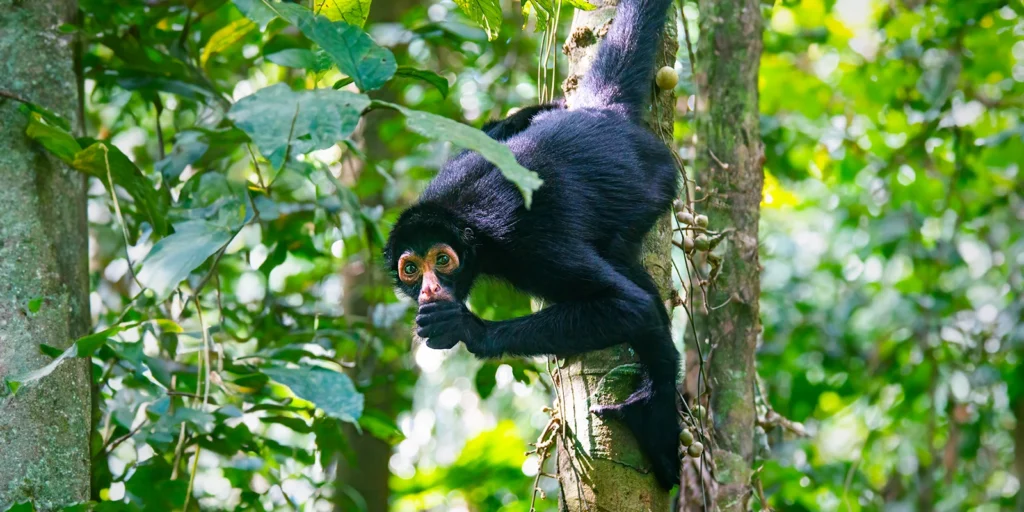
DONATE TO KAWSAY Verified for authenticity Learn More IMPACT PROMISE Our Partners are carefully selected due to their high conservation impact Partner Snapshot Partner Name Kawsay Biological Station Location: Madre de Dios, Peru Appeal Category: Capacity Building and Training Scientific Research Wildlife Conservation Key Species: Black face Peruvian spider monkey Iron wood Harpy eagle Challenges And Threats: Selective logging Lack of capacity building for local students Lack of field equipment Actions: Training students Securing equipment Installing satellite internet connection The Challenge Since 2018, Kawsay Biological Station has managed the conservation of a forest almost 500 acres in size, next to the Tambopata National Reserve. Before 2018, this area was heavily impacted by selective logging, mining, and hunting. Since their presence in the area, these activities have remained controlled. A group of reintroduced spider monkeys is also found in this forest and Kawsay members are focused on ensuring their viability. A large focus of Kawsay’s work is managing the forest through the protection of spider monkeys and involving local students in research and conservation action. Urgent Solutions The illegal activities continue to occur around the Kawsay concession, and the risk and threat are present. It is important that Kawsay staff, interns, and volunteers maintain a constant presence within the forest, while they carry out patrol activities, study wildlife, and above all, monitor the monkeys. In doing so, the forest is monitored and illegal activities have stopped altogether. Increased access to scientific equipment will help Kawsay members to better understand the ecological requirements of the spider monkey, and will improve the training experiences of local students. Why Your Donation Matters Your donation will support the training of local students so they can have better educational opportunities and contribute to conservation long into the future. It will also help to ensure the viability of a reintroduced group of spider monkeys who are important seed dispersers and help the natural regeneration of the forest. The return of this species to an area where they were once considered extinct will help to restore the composition and function of this forest. Partner Qualifications IUCN Member Verified Partner Legally Constituted Top Accountability Effective Impact Conservation Action Heroes
Stop The Destruction Of Madagascar’s Rainforests

DONATE TO NY TANINTSIKA Verified for authenticity Learn More IMPACT PROMISE Our Partners are carefully selected due to their high conservation impact Partner Snapshot Partner Name Ny Tanintsika Location: Ambositra-Vondrozo Forest Corridor Protected Area, Eastern Madagascar Appeal Category: Community Support and Development Endangered Species Wildlife Conservation Key Species: Golden bamboo lemur Southern black-and-white ruffed lemur Milne-Edwards’s sifaka Challenges And Threats: Logging Slash and burn cultivation Fire Actions: Intensify ranger patrols Patroller equipment Community education and awareness The Challenge Human migration into the forest is triggering deforestation and fragmentation of the remaining forest ‘corridor,’ particularly through agricultural extension (rice-farming in the valley floors and gradual deforesting of the surrounding hillsides). Illegal logging and mining activities, fuelled by corruption, further threaten the ecosystem. Additionally, hunting of lemurs for consumption continues to deplete wildlife populations. According to forest cover loss data from 2001 to 2020, the Corridor of Ambositra-Vondrozo (COFAV) lost 51,700 hectares of forest cover, including 37,700 hectares of primary forest. The main threat to fauna is habitat destruction and collection of animals for sale. The Lemur Conservation Strategy identifies COFAV as home to 21 lemur taxa, of which 6 are critically endangered, 7 endangered, 4 vulnerable, 1 near threatened, and 3 data deficient. COFAV has the highest number of lemur species of any protected area in Madagascar—with a disproportionate number in elevated threat categories. Urgent Solutions Ny Tanintsika is addressing these threats through education and awareness-raising activities, and by strengthening forest management and governance. Their approach includes: Increasing the number of monthly patrols to gather more information on existing pressures and to dissuade exploitation of forest trees and agricultural expansion Creating a mixed brigade comprising the Regional Directorate for the Environment and Sustainable Development team, local gendarmerie, and patrol officers from each community forest management association (VOI) to conduct unannounced checks every three months Restoring damaged forest areas through tree planting initiatives with local communities Encouraging people around the forest to plant trees for their daily needs to reduce pressure on natural forests Improving the livelihoods of local residents to engage them as active participants in forest protection Why Your Donation Matters The Ambositra-Vondrozo Forest Corridor contains a wealth of flora and fauna biodiversity that will disappear as forest degradation continues. The impact of climate change is already visible, causing food insecurity for people living around the forest. At the current rate of degradation, these forests could disappear within 70 years. If deforestation continues, valuable genetic diversity—including unique species of wildlife and valuable tree species—will be lost forever. This part of the forest is the source of several rivers in southern and southeastern Madagascar, and its destruction will lead to drought and famine throughout the region. Your donation will help Ny Tanintsika protect this critical forest corridor, preserve endangered species, and support sustainable development for local communities who depend on this ecosystem. Partner Qualifications IUCN Member Verified Partner Legally Constituted Top Accountability Effective Impact Conservation Action Heroes
Preserve Tsimanampetsotsa’s Biodiversity For Future Generations
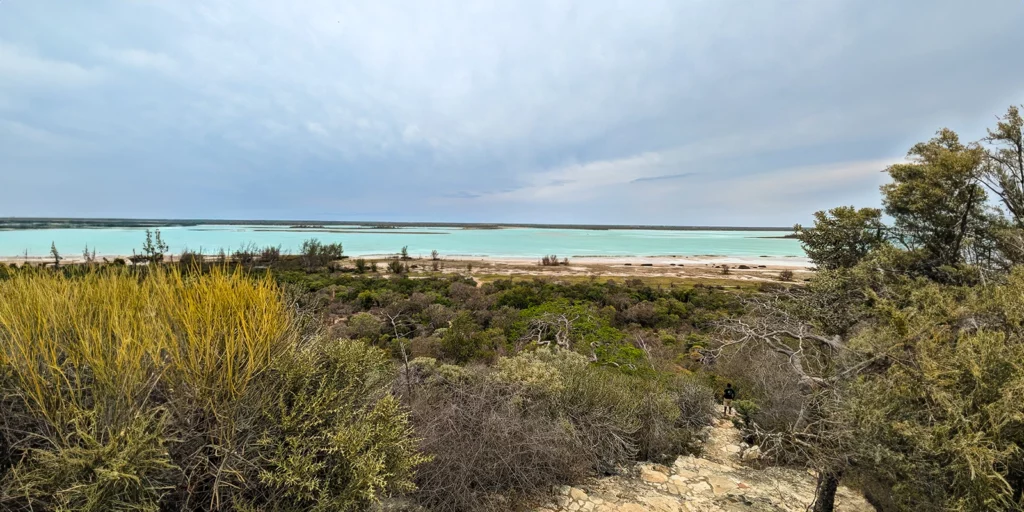
DONATE TO ANALASOA Verified for authenticity Learn More IMPACT PROMISE Our Partners are carefully selected due to their high conservation impact Partner Snapshot Partner Name Association Analasoa Location: Tsimanampesotse National Park, Southwestern Madagascar Appeal Category: Capacity Building and Training Endangered Species Wildlife Conservation Key Species: Radiated tortoise Grandidier’s mongoose Ring-tailed lemur Challenges And Threats: Fires Deforestation Illegal trade of Radiated tortoise Actions: Enhancing the enforcement of patrols to combat illegal activities Conducting outreach programs Monitoring efforts for endangered species The Challenge The Tsimanampesotse National Park represents the dry spiny forests of Madagascar, a unique and highly diverse ecosystem with an exceptionally high number of endemic species. These forests are situated in economically and climatically disadvantaged Southwest Madagascar, where local communities heavily rely on nature for their well-being. The lack of awareness among local populations regarding the importance of conserving resources for the benefit of future generations has led the local communities to the overexploitation of vital natural resources, especially during crises, threatening the rich plant and animal diversity. As a UNESCO World Heritage site, the Madagascar southwestern biodiversity protection is paramount. To protect these natural resources and support local livelihoods, Association Analasoa is challenged to implement innovative biodiversity conservation strategies with increased collaboration and community involvement. Urgent Appeal Association Analasoa’s conservation efforts prioritize mitigating the impact of human activity on biodiversity, a critical component of their mission. Covering 202,525 hectares, Tsimanampesotse National Park requires a strong protection and monitoring system, as well as community education and mobilization to reduce pressures. This initiative demands proactive engagement, steadfast commitment, dynamism, and strategic efficiency in addressing emerging challenges. To succeed, optimizing human and financial resources for nature conservation is essential for tackling the complex tasks involved in preserving the park. Why Your Donation Matters Association Analasoa’s participatory conservation initiatives in the Tsimanampesotse region have helped to improve the low involvement of local communities and increase their awareness of the importance of preserving natural resources. Over the past few years, the Analasoa concept and program, initially localized, have expanded to other areas of Tsimanampesotse National Park. The organization firmly believes that an effective participatory conservation program, combined with capacity building at the local level, forms the foundation of successful conservation initiatives, thus ensuring the future of generations to come. Partner Qualifications IUCN Member Verified Partner Legally Constituted Top Accountability Effective Impact Conservation Action Heroes
Monitor Biodiversity In Madagascar

DONATE TO ASITY Verified for authenticity Learn More IMPACT PROMISE Our Partners are carefully selected due to their high conservation impact Partner Snapshot Partner Name ASITY Madagascar Location: 4 reserves across Madagascar Appeal Category: Community Support and Development Capacity Building and Training Education Endangered Species Protected Area Management Key Species: Sakalava Rail Verreaux’s sifaka Madagascan big-headed turtle Challenges And Threats: Clearance of rainforest for cattle ranching Habitat fragmentation Unsustainable resource use Actions: Protected area management Expand ecotourism infrastructure Community environmental education The Challenge Madagascar’s unique biodiversity faces significant threats from habitat loss, primarily through the clearance of rainforest for cattle ranching and other unsustainable practices. These activities endanger critical species like the Sakalava Rail, Verreaux’s sifaka, and the Madagascan big-headed turtle. ASITY Madagascar works to address these conservation challenges through community engagement, development projects, and collaboration with various sectors. Their approach focuses on protecting important locations while simultaneously improving the socio-economic conditions of local communities who depend on these natural resources. Urgent Appeal ASITY Madagascar’s conservation work spans four protected areas across Madagascar, each requiring consistent monitoring and management. Their efforts include capacity building for local communities and implementing sustainable management practices that balance ecological protection with human needs. Through focused initiatives, ASITY fosters long-term behavior change through awareness raising, information sharing, and environmental education. Their work empowers communities and future generations to understand the vital connection between their wellbeing and the conservation of local natural resources, creating pathways for sustainable coexistence. Why Your Donation Matters Donations directly support ASITY’s vital monitoring efforts in their four Protected Areas, including capacity building initiatives and the implementation of sustainable management practices. Every contribution makes a meaningful impact in preserving Madagascar’s natural ecosystems. By supporting ASITY Madagascar, donors play a crucial role in solving pressing conservation challenges. Through their integrated approach that combines environmental protection with community development, ASITY creates positive and lasting impacts for both people and biodiversity throughout Madagascar Partner Qualifications IUCN Member Verified Partner Legally Constituted Top Accountability Effective Impact Conservation Action Heroes
Ny Tanintsika
DONATE TO NY TANINTSIKA Verified for authenticity Learn More IMPACT PROMISE Our Partners are carefully selected due to their high conservation impact Partner Snapshot Partner Ny Tanintsika Location Madagascar, Africa Category Community Support and Development Capacity Building and Training Wildlife Conservation Urgent Appeals Listen to the Cries of Nature Date Founded 2002 Website www.nytanintsika.org Partner Qualifications Verified Partner Legally Constituted Effective Impact Conservation Action Heroes About Ny Tanintsika Ny Tanintsika, meaning “Our Land” in Malagasy, is a non-profit created with support from the Scottish charity ‘Feedback Madagascar’ with the aim of Developing a sustainable local model for good governance, accountability and efficiency Bridging the gap of misunderstanding often found between local beneficiaries and foreign NGOs, and Sustainably developing Malagasy civil society Ny Tanintsika’s mission is to contribute to poverty reduction and sustainable natural resource management. Their vision is “Healthy people who take charge of their own development, living in harmony with a flourishing natural world in a fair society.” Their slogan is “Against Poverty, for Nature”. Ny Tanintsika’s priority geographical areas are those around the COFAV Protected Area (rainforest corridor) as well as the tapia forest of Amoron’i Mania region. They work with communities around these biodiversity hotspots through an integrated approach, working to improve food security, livelihoods, education, health, and forest management. Promotion of good governance and human rights are essential elements of their work. Their Challenges Madagascar’s wildlife faces enormous pressures, including deforestation, increasing droughts, and illegal poaching. Due to a lack of resources, the national forestry administration is unable to adequately arrest offenders of the forests and wildlife. In response, Ny Tanintsika has stepped in and formed management communities. They reserve resources to be able to urgently mobilize the forest administration team in order to enforce conservation practices and protect the forests. Their Approach Ny Tanintsika has a multi-pronged approach to their mission. Their activities include community patrol initiatives involving youth, women (who were traditionally excluded from conservation actions), and innovative technology. They also work to fight wildfires, raise awareness of forestry legislation and provide support for income-generating activities for patrollers. Why They Need Your Help Ny Tanintsika needs your support to increase patrols and invest in technological equipment to improve data collection and reporting. They are reliant upon generouns donations to continue their essential work of empowering communities and conserving wildlife.
Madagasikara Voakajy
DONATE TO MADAGASIKARA VOAKAJY Verified for authenticity Learn More IMPACT PROMISE Our Partners are carefully selected due to their high conservation impact Partner Snapshot Partner Madagasikara Voakajy Location Madagascar, Africa Category Capacity Building and Training Ecosystem Restoration Scientific Research Urgent Appeals You Are Our Hope For Madagascar! Date Founded 2005 Website www.madagasikara-voakajy.org Partner Qualifications IUCN Member Verified Partner Legally Constituted Top Accountability Effective Impact Conservation Action Heroes About Madagasikara Voakajy Madagasikara Voakajy is conservation non-profit organization based in Bobaomby, Madagascar, that is dedicated to the conservation of endemic and critically endangered species in Madagascar. Their mission is to preserve Madagascar’s endemic species from extinction in the wild. They recognize that this is impossible to achieve without the involvement of local community members and are thus dedicated to taking a locally-led approach to conservation. Since 2006, Madigasikara Voakajy has carried out research on the Golden mantella frog in eastern Madagascar, leading its conservation strategy. In 2015, a new protected area was created to ensure the frog’s conservation. Five years later, the Golden mantella frog was down-listed from Critically Endangered to Endangered on the IUCN Red List. This is only one of Madigasikara Voakajy’s many recent accomplishments conservation. Between 2009-2012, Madagasikara Voakajy investigated patterns of bushmeat hunting in Madagascar. Their results highlighted the significance of hunting in the decline of lemur populations. Since then, stopping lemur hunting has been a top priority in all of Madagasikara Voakajy’s conservation projects. Since 2014, Madagasikara Voakajy has investigated the biology and ecology of the Critically Endangered Perrier’s baobab, of which only 99 mature individuals are found in the wild. By 2020, they had located an additional 50 mature individuals, produced over 5,000 seedlings, and planted them. They continue to monitor the survival and growth of the planted seedlings. Their Challenges A large part of the forests of Bobaomby have been impacted by loggers due to the expansion of agricultural land, despite the fact that these forests are home to many endemic flora and fauna. The lack of funding to implement conservation tactics for the forests and wildlife species constitutes a major challenge in this area. Their Approach Local communities are at the heart of Madagasikara Voakajy’s conservation approach. Their main objectives for 2024-2028 are: Research: Better understand the biology and ecology of target species, how they interact with humans, and their conservation status Governance: Establish local structures capable of effectively managing the conservation of target species and their habitats Valorisation: Identify and promote wildlife-based economic models that can generate essential benefits for local communities while simultaneously encouraging them to reduce pressures on species of concern and their natural habitats, ultimately resulting in increased conservation success Restoration: Restore degraded habitats of target species in the wild Madagasikara Voakajy uses the results of scientific studies to guide their conservation efforts. With donor support in 2023, they planted 6,000 trees over 10 acres alongside local villagers. They also created an agreement with the community to plant baobabs, an indigenous tree of great cultural significance that is also vital for Madagascar’s wildlife. Why They Need Your Help Madagasikara Voakajy is looking for support to continue their forest restoration work and to strengthen and train their staff and community members on the sustainable management of natural resources. They are also working to advance scientific research on the key species existing of Bobaomby in order to improve their conservation strategies. All of their conservation activities are reliant upon donations to continue.
Kawsay Biological Station
DONATE TO KAWSAY Verified for authenticity Learn More IMPACT PROMISE Our Partners are carefully selected due to their high conservation impact Partner Snapshot Partner Kawsay Biological Station Location Peru, Latin America Category Capacity Building and Training Scientific Research Wildlife Conservation Urgent Appeals Forest Management Through Monitoring Primates Date Founded 2018 Website www.kawsaycenterperu.org Partner Qualifications Verified Partner Legally Constituted Effective Impact About Kawsay Biological Station The Kawsay Biological Station is a wildlife research non-profit located in Madre de Dios, Peru — one of the most biodiverse areas on the planet. Kawsay is a Quechua word that means life. Just one hour by boat from the city, the research station works in the buffer zone of the Tambopata National Reserve. This buffer zone is heavily impacted by illegal gold mining, selecting logging, and hunting. Kawsay is committed to monitoring, providing education, and managing research programs, which are available to everyone, whether they are a conservation professional or not. One of Kawsay’s major current projects is the reintroduction of a population of Endangered Black-faced spider monkeys to the area. Since 2018, there have been 15 births in the reintroduced spider monkey population. Kawsay’s efforts, therefore, have allowed the species to re-establish in an area where it was previously extinct. Their Challenges The lower part of the Madre de Dios River has suffered greatly from illegal gold mining, logging, and hunting. However, since the construction of Kawsay Biological Station, no further illegal activities have been registered in the area. Kawsay’s monitoring of the forest is essential in continuing to prevent illegal activities in Madre de Dios. Their Approach Kawsay’s approach to the conservation of the natural wonders of Peru is multi-faceted, with a focus on research. Their practices include: Management of the forest through patrolling and surveillance Training local and international student, providing them with the opportunity to learn about the forest and do their own research under the guidance of our experienced biologists Promoting research, with a current focus on the Black-faced spider monkey. In the last year, 9 new species were discovered at the Kawsay Biological Station. Why They Need Your Help Kawsay’s research and forest monitoring work is reliant upon donations to continue. Every year, 12-24 local students are selected to be trained at Kawsay. Your donation directly contributes to the preservation of the Peruvian Amazon Rainforest and all the species that call it home.
Fundación ProAves
DONATE TO FUNDACIÓN PROAVES Verified for authenticity Learn More IMPACT PROMISE Our Partners are carefully selected due to their high conservation impact Partner Snapshot Partner Fundación ProAves Location Colombia, Latin America Category Endangered Species Land Purchases Wildlife Conservation Urgent Appeals Save Colombia’s Chocó Rainforest Urgent Land Purchase to Save Endangered Species Date Founded 1998 Website www.proaves.org Partner Qualifications IUCN Member Verified Partner Legally Constituted Top Accountability Effective Impact Conservation Action Heroes About Fundación ProAves The Fundación ProAves was hatched 25 years ago by a group of Colombian conservationists desperate to save the Yellow-eared parrot from the brink of extinction. They succeeded in what is widely considered one of the greatest species revivals ever documented. Inspired by this new hope, ProAves expanded its efforts to save other globally threatened species, especially birds and amphibians throughout Colombia, by means of research, innovative conservation actions, and community outreach. ProAves is the leading national conservation non-profit in Colombia, which is one of the most biologically diverse countries on earth. ProAves is active across all major biomes and regions of Colombia and manages 28 Nature Reserves in critical biodiversity hotspots, permanently protecting the homes of countless endangered species and unique habitats. The passion and commitment to conservation shown by the ProAves family is nurtured by alliances and collaboration with local and indigenous communities, with whom they work to save biodiversity. The mission of Fundación ProAves is to protect birds and biodiversity in Colombia through research, specific conservation actions, and outreach with the community. Their Challenges Colombia is home to an astounding diversity of landscapes, included a vast area of the Amazon, the glacier-capped mountains of the Andes, mangroves along the Pacific Coast, vast stretches of the Caribbean Sea, and the open savanna of the Orinoco River basin—combined, these habitats hold some of the greatest biological diversity on the planet. In fact, Colombia is second only to Brazil as the most “megadiverse” country on earth, hosting over 10% of the planet’s biodiversity. Worldwide, it ranks first in bird and orchid species diversity and second in plants, butterflies, freshwater fishes, and amphibians. Tragically, Colombia currently faces multiple major threats to its once-vast forest landscapes. The instability from the COVID-19 pandemic crisis allowed unscrupulous persons to invade protected areas and exploit natural resources as government entities struggled to respond. Combining this with the 2016 peace process that sparked a tsunami of natural resource exploitation and colonization, deforestation rates are skyrocketing to some of the highest worldwide. The unprecedented exploitation of Colombia’s natural treasures has decimated vital habitats necessary for the survival of many unique and range-restricted species. ProAves has scaled up their actions to stop deforestation. They continue to face mounting challenges but will continue to fight to save precious wildlife and habitats across Colombia. Their Approach ProAves conservation approach is built on 25 years of effective science-based, laser-focused biodiversity conservation action. Their tried and tested field experience has led to some of the most successful conservation impacts and outcomes in Latin America. Their objectives include: Targeted Research in Search of Conservation Solutions: Locating priority areas for endangered species, increasing knowledge of threats to those species, designing conservation actions that address those threats, and establishing conservation strategies for Colombia. Direct Conservation Action: Implementing science-based action plans and strategies to save endangered species and sites. This includes establishing new Protected Areas, improving and strengthening reserve management plans, and promoting policies for the protection and conservation of biodiversity and their habitats. Community Outreach: Working with local people is key to ensuring conservation actions survive in the long term. ProAves prioritizes environmental education for youth and helps provide communities with knowledge and skills to sustainably benefit from nature, such as ecotourism training and maintaining traditional knowledge and practices. ProAves Reserves are not islands of biodiversity, but are instead interactive nodes of conservation within the larger landscape. ProAves makes a concerted effort to work with and educate the community through campaigns, workshops, and capacity building. A clear example of these actions is at the El Paujíl ProAves Reserve, where direct conservation and environmental education carried out to save the Critically Endangered Blue-billed curassow resulted in a ban on hunting this turkey-sized bird. Consequently, the population density of the curassow has increased from 3.1 individuals per km2 in 2004 to over 8.4 individuals per km2 in 2020. This significant population increase shows the importance of the protected areas and working with the community. Why They Need Your Help Your donation to ProAves will help them to: Save more than 12% of all bird species on the planet (1,337 bird species in ProAves reserves) Protect in perpetuity more than 160,600 acres of crucial wildlife habitat across Colombia that contains an estimated 10% of all flora and fauna species on Earth Support over 70 conservationists dedicated to protecting Colombia’s wonderful wildlife
Association Analasoa

DONATE TO ASSOCIATION ANALASOA Verified for authenticity Learn More IMPACT PROMISE Our Partners are carefully selected due to their high conservation impact Partner Snapshot Partner Association Analasoa Location Madagascar, Africa Category Capacity Building and Training Endangered Species Wildlife Conservation Urgent Appeals Preserve Tsimanampesotse’s Biodiversity For Future Generations Date Founded 2018 Website facebook.com/andranovaoanalasoa Partner Qualifications Verified Partner Legally Constituted Top Accountability Effective Impact Conservation Action Heroes About Association Analasoa The Analasoa Association is located in Tsimanampesotse National Park (TNP) of southwestern Madagascar, an area that is considered one of the world’s highest conservation priorities. The site contains different habitats including coastal areas, the Mahafaly plateau, and the southwestern spiny forest of Madagascar. These dry, spiny forests represent a unique and highly diverse ecosystem with an exceptionally high number of endemic species. It is also one of Madagascar’s most threatened vegetation types — the forest cover was reduced by 45% between 1973 and 2013. Inhabited by the Mahafaly people, whose livelihoods are dependent entirely on the use of natural resources, TNP is also one of the most economically and climatically disadvantaged regions. High forest degradation rates are the result of fire, grazing, slash-and-burn agriculture, logging, and production of fuelwood and charcoal. Their Challenges Located in one of the most impoverished parts of Madagascar, the challenges of sustaining wildlife and natural habitat are immense and can only be successfully overcome through the active participation of both local community members and Tsimanampesotse National Park officials. These challenges include significant deforestation and wildlife poaching. Their Approach Association Analasoa takes a varied approach, managing a variety of conservation and sustainable development programs. They empower local communities to shift their understanding of conservation. They manage educational nurseries, implement capacity-building programs, and much more. Association Analasoa has achieved remarkable success through their initiatives and programs. Why They Need Your Help Your donation will help protect endangered species, increase the surveillance of Tsimanampesotse National Park, increase the capacity for ecotourism in the area. Donations directly contribute to the positive transformation of TNP, fostering biodiversity conservation among future generations.