
South Rupununi Conservation Society
South Rupununi Conservation Society Partner Snapshot Partner South Rupununi Conservation Society (SRCS) Location Guyana, Latin America Category Capacity Building and Training Scientific Research Wildlife Conservation Urgent Appeals None currently Date Founded 2002 Website mns.my srcs-gy.com Partner Qualifications Verified Partner Legally Constituted Effective Impact About South Rupununi Conservation Society The South Rupununi Conservation Society are a community-led non-profit with a membership largely consisting of Indigenous Rupununi residents, working across biodiversity research, cultural heritage, environmental education, sustainable livelihoods, and organizational strengthening. Their species programs focus on six priorities—the Red siskin, Giant armadillo, Giant anteater, Yellow-spotted river turtle, Hoary-throated spinetail, and Rio branco antbird. Over two decades they have supported 865,000+ acres of community-managed conservation areas and reached more than 2,000 students with environmental education. Their Challenges Guyana’s forests and biodiversity are under growing pressure. Mining, logging, and the expanding oil and gas sector drive deforestation, soil erosion, and water contamination. In the South Rupununi, changing fire regimes, irregular rainfall, large-scale agriculture, new roads, and overharvesting of wildlife are compounding the strain—all while communities try to balance development with protecting the ecosystems they depend on. Their Approach SRCS use a community-based conservation model that combines scientific research, Indigenous knowledge, and local leadership. Programs are designed and run alongside Indigenous communities, making conservation culturally grounded and durable. Field research on their six priority species feeds directly into practical action—from the community-managed conservation areas on titled Indigenous lands, to bird guide training that links conservation with real income. Why They Need Your Help SRCS relies on external funding to sustain conservation, education, and livelihood programs across the Rupununi. Your support keeps biodiversity research and species monitoring going, powers ranger and guide training, and strengthens youth environmental leadership—keeping community-led conservation alive in one of the most biodiverse regions on Earth.
Emergency Wildfire Response and Prevention in Bolivia
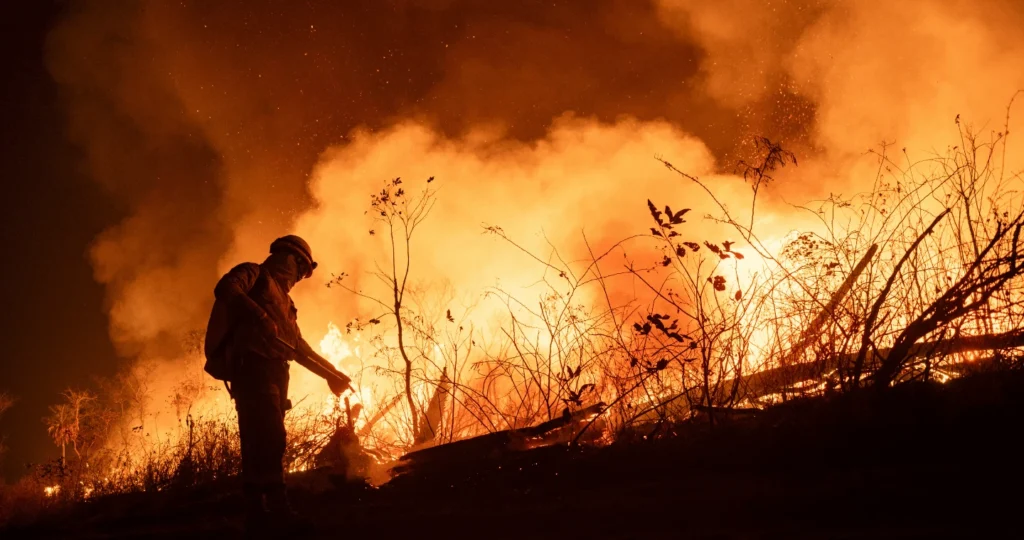
Emergency Wildfire Response And Prevention In Bolivia Bolivia is in the middle of an escalating wildfire crisis. Prolonged drought, rising temperatures, and unsustainable land use have pushed the Chaco, Chiquitania, and Pantanal into increasingly frequent megafires. Each fire season destroys critical habitat, degrades soils and waterways, and puts Indigenous and rural communities at risk. Raised so far $0 Goal $10K 0% funded APPEAL Snapshot Partner Naturaleza, Tierra y Vida (NATIVA) Location Gran Paisajes del Chaco, Chiquitania y Pantanal, Bolivia Appeal Category Protected Area Management Wildlife Conservation Community Support and Development Key Species Jaguar, Chaco peccary, Lowland tapir Partner Qualifications IUCN Member Verified Partner Legally Constituted Top Accountability Effective Impact Conservation Action Heroes The Challenges Bolivia is in the middle of an escalating wildfire crisis. Prolonged drought, rising temperatures, and unsustainable land use have pushed the Chaco, Chiquitania, and Pantanal into increasingly frequent megafires. Each fire season destroys critical habitat, degrades soils and waterways, and puts Indigenous and rural communities at risk. Many protected landscapes still lack the equipment, early-warning systems, and trained brigades needed to contain fires before they spread. Urgent Solutions NATIVA is launching an integrated wildfire prevention and response program. They will strengthen local brigades with specialized training, protective equipment, and logistical support; expand satellite monitoring to detect hotspots in real time; and run awareness campaigns to help communities adopt preventive fire-management practices before the next dry season. The goal: sharply reduce wildfire impact and safeguard critical habitat for jaguars, Chaco peccaries, lowland tapirs, and the people who share their range. Why Your Donation Matters Your support goes straight to protecting some of Bolivia’s most extraordinary ecosystems. Every contribution equips a frontline brigade, keeps a monitoring system online, or fuels an emergency deployment when a fire breaks out. Investing in prevention now is how we stop irreversible biodiversity loss and defend Indigenous territories—before the next fire season hits.
The Society for the Conservation of Nature of Liberia

Society for the Conservation of Nature of Liberia Partner Snapshot Partner Society for the Conservation of Nature of Liberia (SCNL) Location Monrovia, Liberia, Africa Category Protected Area Management Scientific Research Wildlife Conservation Urgent Appeals None currently Date Founded 1986 Website scnlliberia.org Partner Qualifications IUCN Member Verified Partner Legally Constituted Effective Impact About Society for the Conservation of Nature of Liberia The Society for the Conservation of Nature of Liberia (SCNL) is Liberia’s leading conservation organization, working to protect the country’s globally significant forests, wildlife, and ecosystems. For nearly four decades, SCNL has delivered high-impact conservation in partnership with government, communities, and international networks including BirdLife International and IUCN, ensuring lasting benefits for both nature and people. Their Challenges Liberia’s forests are among West Africa’s last strongholds of biodiversity, but they are under increasing threat from mining, poaching, illegal logging, and weak enforcement capacity. At the same time, conservation efforts are constrained by limited long-term funding and growing pressure from communities seeking sustainable livelihoods. Without sustained investment, critical ecosystems and endangered species are at risk. Their Approach Your support enables SCNL to deliver proven, scalable solutions: Protect critical habitats through strengthened Protected Area management and anti-poaching efforts Support community-led conservation, empowering local people as stewards of their forests Advance climate solutions through carbon finance, agroforestry, and sustainable forest enterprises. Generate data for impact, using science to guide effective conservation action. SCNL works at the landscape scale, integrating conservation with livelihoods so that protected nature also improves lives. From community forestry to biodiversity monitoring systems, their approach is practical, inclusive, and results-driven. Why They Need Your Help By supporting SCNL, you are directly investing in the protection of one of Africa’s most important forest ecosystems while helping communities build resilient, sustainable futures. Your contribution directly protects wildlife, strengthens communities, and secures the future of Liberia’s natural heritage.
Protecting Guatemala’s Cloud Forest From Devastating Wildfires

Protecting Guatemala’s Cloud Forest From Devastating Wildfires The Sierra de las Minas Biosphere Reserve protects Guatemala’s largest continuous cloud forest. But, it has faced many wildfires, requiring numerous firefighters who work with insufficient resources and face life-threatening conditions during increasingly severe fire seasons driven by climate change. With your support, a better-equipped team is possible. Raised so far $0 Goal $10K 0% funded APPEAL Snapshot Partner Defensores de la Naturaleza Location Sierra de las Minas Biosphere Reserve Appeal Category Capacity Building and Training Protected Area Management Wildlife Conservation Key Species Baird’s tapir (Tapirus bairdii) Horned guan (Oreophasis derbianus) Jaguar (Panthera onca) Golden-cheeked warbler (Setophaga chrysoparia) Partner Qualifications IUCN Member Verified Partner Legally Constituted Top Accountability Effective Impact Conservation Action Heroes The Challenges Each year, wildfires burn more than 1,200 acres in the Sierra de las Minas Biosphere Reserve, a vast mountain range in eastern Guatemala that protects the country’s largest remaining cloud forest. These fires destroy critical biodiversity and natural ecosystems while degrading air quality and threatening water availability for over 200 communities in the region. Forest firefighters are essential to both suppressing active fires and preventing future ones through community monitoring, raising awareness, and training local farmers in safer agricultural burning practices. Yet they work with insufficient resources and face life-threatening conditions during increasingly severe fire seasons driven by climate change. Without adequate support, these frontline defenders cannot effectively protect one of Guatemala’s most vital conservation areas. Urgent Solutions Defensores de la Naturaleza partners with local communities to combat wildfires in the Sierra de las Minas Biosphere Reserve. This year, Porta Hotel Antigua joins these efforts, creating a cross-sector alliance to prevent and respond to the wildfire crisis. Why Your Donation Matters The Sierra de las Minas Biosphere Reserve protects Guatemala’s largest continuous cloud forest and endangered species like the Baird’s tapir, Jaguar, and Horned guan, while regulating water supplies for hundreds of thousands of people and capturing carbon that fights climate change. Guatemala is among the countries most vulnerable to climate change, and wildfires are accelerating environmental destruction. When the Sierra de las Minas forest burns, communities lose clean water and livelihoods, wildlife loses habitat, and we all lose a critical climate ally. Your support protects this treasure when it’s needed most. Your donation funds the hiring, training, and equipping of community-based forest firefighters who serve as the frontline defense for this irreplaceable ecosystem. It provides the uniforms, tools, and transportation needed to work safely across thousands of acres of remote cloud forest. Trained teams suppress active fires, monitor vulnerable areas, educate communities about fire prevention, and restore burned landscapes.
Help Support Tesoro Escondido Reserve Parabiologists

Help Support Tesoro Escondido Reserve Parabiologists As Ecuador turns away from an emphasis on environmental conservation, the people behind the country’s environmental education programs are being left behind. Parabiologists are essential to this important work – yet resources for local salaries are increasingly scarce. With your support, wildlife monitoring can continue and communities can flourish. Raised so far $0 Goal $10K 0% funded APPEAL Snapshot Partner Tesoro Escondido Reserve Foundation Location Lowland Ecuadorian Chocó, Esmeraldas, Ecuador Appeal Category Capacity Building and Training Community Support and Development Education Endangered Species Protected Area Management Wildlife Conservation Key Species Brown headed spider monkey Jaguar Giant macaw Harpy eagle Partner Qualifications Verified Partner Legally Constituted Top Accountability Effective Impact Conservation Action Heroes The Challenges Ecuador’s current conservation reality is shifting dangerously. The merger of the Environment Ministry with the Energy and Mines Ministry signals a move toward extractive priorities, while illegal mining, expanding agriculture, timber extraction and organized crime continue to drive some of the country’s highest deforestation rates—especially in Esmeraldas, where the Tesoro Escondido Reserve is located. Local communities remain vulnerable, facing limited access to basic services and growing threats to their land rights. New national regulations restrict NGO action and increase costs, placing both forests and the Rights of Nature at risk. Meanwhile, funding for local conservation jobs is shrinking. We are running out of time to protect the forest and the people who defend it. Urgent Solutions Tesoro Escondido responds by strengthening community-led conservation through its team of local parabiologists—young leaders and agents of change who monitor wildlife, support jaguar coexistence, teach environmental education, restore forests, protect native bees, and support Chachi communities in participatory planning. In 2026, we aim to reinforce our institutional capacity: improving financial stability, governance, monitoring systems, community resilience, and youth leadership. Conservation must remain rooted in local knowledge, science, and strong communities—especially in a rapidly changing landscape. Why Your Donation Matters Your support directly funds the people who protect the forest every day. Parabiologists are essential—wildlife monitors, educators, community leaders, agents of change, role models, and the link between science and territory. Yet resources for local salaries are increasingly scarce. Your donation keeps monitoring active, strengthens community planning, supports women and youth, and ensures that conservation remains led by those who call this forest home. Supporting Tesoro Escondido means standing with the forest—and with its guardians.
Save Colombia’s Chocó Rainforest

Save Colombia’s Chocó Rainforest More than 70% of Colombia’s Chocó bioregion – one of the wettest and most biodiverse places on Earth – has already been lost. Losing it entirely would break the forest corridor and tear apart the ecological continuity the entire ecosystem depends on. ProAves needs your urgent help to organize conservation efforts and permanently protect the corridor. Raised so far $0 Goal $10K 0% funded APPEAL Snapshot Partner Fundación ProAves Location Las Tángaras Nature Reserve, Chocó, Northwest Colombia Appeal Category Ecosystem Restoration Endangered Species Protected Area Management Reforestation Wildlife Conservation Key Species Gold-ringed tanager Black-and-gold tanager Baudo guan Colombian black spider monkey Harlequin poison frog Partner Qualifications IUCN Member Verified Partner Legally Constituted Top Accountability Effective Impact Conservation Action Heroes The Challenges Colombia’s Chocó bioregion, one of the wettest and most biodiverse places on Earth, is vanishing at an alarming rate. More than 70% of its rainforest has already been lost, leaving only scattered remnants capable of supporting its astonishing wildlife. At the heart of this landscape lies the 9,960-acre Las Tángaras Reserve, one of the last intact strongholds for species found nowhere else. Its cloud forests shelter critically threatened wildlife, including the Gold-ringed tanager and the Colombian black spider monkey. But this refuge is now in immediate danger. A 242-acre property located inside the reserve boundary is scheduled for sale before year-end. If ProAves cannot secure it in time, it will be converted to cattle pasture and an abattoir triggering deforestation that would fragment the reserve, destroy habitat, and jeopardize the survival of its endangered species. This is one of the last unprotected properties directly bordering Las Tángaras Reserve. Losing it would break the forest corridor and tear apart the ecological continuity the entire ecosystem depends on. Urgent Solutions ProAves urgently seeks to purchase the 242-acre property to secure it forever. Your support will: Protect a rainforest and Cloud forest twice the size of Vatican City, sheltering ~68,600 mature trees. Prevent the release of 90,000 metric tons of stored CO₂ equivalent to the electricity use of 1,200 homes for a decade. Complete a unified 9,960-acre conservation corridor, strengthening habitat connectivity for threatened birds, mammals, and amphibians. Safeguard cloud forest headwaters that feed the Atrato River, a lifeline for Afro-Colombian communities downstream. Permanently protect one of Colombia’s most endangered biodiversity corridors at a critical moment. Why Your Donation Matters This is a one-time opportunity to save a vital tract of rainforest that stabilizes climate, protects water systems, and shelters species found nowhere else on Earth. Every gift in your name helps secure irreplaceable habitat and keeps the Chocó’s extraordinary wildlife alive, forever.
Help Indigenous Forest Defenders Rebuild After Violent Attack

DONATE TO MAKIROVANA Verified for authenticity Learn More IMPACT PROMISE Our Partners are carefully selected due to their high conservation impact Partner Snapshot Partner Name Makirovana Association Location: Makirovana-Tsihomanaomby Protected Area (Northeastern Madagascar) Appeal Category: Community Support and Development Protected Area Management Wildlife Conservation Key Species: Sanford’s lemur Crowned lemur Challenges And Threats: Violent retaliation from illegal gold miners Destruction of homes and conservation infrastructure Ongoing threats to Indigenous forest defenders Illegal mining within Protected Area Actions: Rebuild 88 destroyed family homes Restore conservation facilities and tree nurseries Strengthen community-led forest patrols Provide emergency support for displaced families The Challenge The Makirovana-Tsihomanaomby Protected Area protects critical habitat for Critically Endangered lemur species and countless additional species. An Indigenous community has co-managed this forest for generations through the Makirovana Association, a local grassroots organization and Conservation Allies partner. In November 2025, community patrols discovered illegal gold miners operating inside the Protected Area. Police arrested two miners, who promised not to return. In retaliation, a larger group of miners launched a violent attack on villages around the Protected Area. The miners targeted families directly involved in forest protection. They destroyed homes, threatened residents, and kidnapped one Association member. Many families evacuated to temporary shelter in nearby Sambava city. The violence escalated when miners returned and burned 88 family homes, the village chief’s house, and all conservation facilities including ten native tree nurseries and reforestation sites. Local authorities responded by deploying more than 60 armed officers who have begun making arrests. The kidnapped conservationist was safely released. However, the community has lost nearly everything and needs immediate help to rebuild their homes and restore the conservation infrastructure that protects this biodiverse landscape. Urgent Solutions The Makirovana community needs immediate support to rebuild and continue protecting this critical forest habitat. Your donation will fund: Rebuild Homes: Construct 88 new homes for families who lost everything while defending their forests, allowing them to return from temporary shelters and resume their lives. Restore Conservation Infrastructure: Rebuild ten native tree nurseries and reforestation sites that were burned, ensuring conservation work continues without interruption. Strengthen Community Patrols: Provide equipment, training, and operational support for patrols that protect the forest from illegal mining and other threats. Emergency Family Support: Provide immediate assistance to families currently displaced in Sambava, including food, supplies, and temporary housing needs. Enhance Security: Work with local authorities to improve safety measures for Indigenous forest defenders and ensure their rights as stewards of this landscape are protected. Restore Livelihoods: Help families rebuild the sustainable economic activities disrupted by the attack, providing long-term stability for conservation efforts. Why Your Donation Matters Your donation directly supports Indigenous people who have risked their safety to protect endangered wildlife and one of Madagascar’s most biodiverse forests. The Makirovana community faces an immediate crisis that threatens both their homes and the Protected Area they manage. The $15,000 fundraising goal will enable the Makirovana Association to rebuild destroyed infrastructure and continue their conservation work. Your support provides displaced families with new homes so they can return to their land. It restores years of conservation work lost when nurseries and reforestation sites were burned. This support also sends a clear message: communities defending forests against illegal activities are not alone. Your donation helps ensure that violent intimidation does not succeed in driving Indigenous stewards away from the landscapes they protect. The Makirovana people have shown commitment to their forests despite facing violence. By helping them rebuild, you enable them to continue protecting habitat for biodiversity found nowhere else on Earth. Your donation helps them recover from this attack and continue their role as forest defenders for future generations. Partner Qualifications Verified Partner Legally Constituted Top Accountability Effective Impact Conservation Action Heroes
Achieving Coexistence Between Communities and Wild Elephants

Achieving Coexistence Between Communities and Wild Elephants As the Padang Sugihan area of Sumatra experiences more economic and societal growth, the local communities are simultaneously experiencing more negative interactions with the nearby elephant populations. Your help is crucial to ensuring lasting coexistence between elephant conservation and collective safety in an increasingly human-dominated landscape. Raised so far $0 Goal $10K 0% funded APPEAL Snapshot Partner Belantara Foundation Location South Sumatra Province, Indonesia Appeal Category Endangered Species Community Support and Development Education Key Species Sumatran elephant Partner Qualifications IUCN Member Verified Partner Legally Constituted Top Accountability Effective Impact Conservation Action Heroes The Challenges The Padang Sugihan Landscape on the east coast of southern Sumatra spans approximately 700,000 hectares of peat swamp that has faced recurring forest fires since 1997. This critical habitat supports a Sumatran elephant herd of 100-120 individuals, representing 5-10% of the total wild elephant population remaining in Sumatra. With this population size, the Padang Sugihan elephant herd is one of the few Sumatran elephant populations with a realistic chance of long-term survival. Since 1982, the Indonesian Government’s transmigration program has gradually relocated people from Java to this area. The landscape has since transformed into a mosaic of community settlements, agricultural lands, industrial forest plantations, and oil palm estates, alongside a small conservation area in the western portion. As economic development expands through forestry and palm oil industries, combined with population growth driving increased demand for agricultural land, negative interactions between humans and wild elephants have escalated dramatically over the past decade. Wild elephants increasingly enter village areas, destroying rice fields and agricultural crops, damaging homes, and tragically causing human fatalities. If this situation continues unchecked, conservation efforts for the critically endangered Sumatran elephant will become increasingly complex. Without community support, wild elephants will continue to be viewed as agricultural pests and enemies rather than as a vital part of the ecosystem deserving protection. Urgent Solutions Creating lasting coexistence between elephant conservation and economic development requires a holistic, comprehensive, and integrated approach. The Belantara Foundation proposes establishing conditions of mutual respect that allow harmonious coexistence in the Padang Sugihan Landscape while improving community livelihoods sustainably. To achieve long-term conservation success, the following urgent activities are essential: Community Capacity Building: Enhance the skills and equipment of community-based conflict mitigation teams already established in several villages. Industry Collaboration: Work with forestry and palm oil plantation concessions to create elephant-friendly management practices. Stakeholder Awareness: Educate all landscape stakeholders about the importance of coexistence between industrial sectors, communities, and wild elephants. Environmental Education: Provide education programs for local communities, especially early childhood learners, about the ecological benefits of wild elephants. Alternative Livelihoods: Develop agricultural commodities with high economic value that elephants naturally avoid, reducing crop-raiding incidents. Why Your Donation Matters Your donation is crucial to securing the long-term survival of this critically endangered Sumatran elephant population living in an increasingly human-dominated landscape. With 100-120 individuals now fragmented into smaller groups, these elephants face unprecedented challenges that require immediate intervention. The $100,000 fundraising goal will enable the Belantara Foundation to implement comprehensive conservation activities that address both elephant protection and community needs. Your support will fund conflict mitigation teams equipped with the tools and training needed to safely manage elephant encounters. It will facilitate partnerships with industrial concessions to create wildlife corridors and safe foraging areas, reducing elephants’ need to enter agricultural lands. Beyond immediate conflict reduction, your contribution will support long-term solutions through education programs that foster appreciation for elephants among the next generation. By developing alternative crop systems that provide economic benefits without attracting elephants, communities can thrive alongside wildlife. This innovative approach transforms the narrative from conflict to coexistence, ensuring that the Padang Sugihan elephant herd not only survives but becomes a source of pride and sustainable prosperity for local communities.
Belantara Foundation

Belantara Foundation Partner Snapshot Partner Belantara Foundation Location Sumatra and Kalimantan, Indonesia Category Community Support and Development Capacity Building and Training Ecosystem Restoration Education Endangered Species Scientific Research Wildlife Conservation Urgent Appeals Achieving Coexistence Between Communities and Wild Elephants Date Founded 2014 Website belantara.or.id Partner Qualifications Verified Partner Legally Constituted About Belantara Foundation Belantara Foundation is an independent nonprofit organization based in Indonesia that plays a pivotal role in environmental conservation, forest and peatland restoration, wildlife protection, and sustainable community development, particularly across the biodiverse regions of Sumatra and Kalimantan. Their mission is to support sustainable landscape management that strikes a balance between long-term economic development, environmental protection, and improved local livelihoods. Belantara collaborates with government bodies, NGOs, private companies, academia, and local communities to implement impactful, science-driven programs. In 2024, the foundation became a Member of the International Union for Conservation of Nature (IUCN). Their Challenges Indonesia is home to some of the world’s most ecologically valuable forests—but these ecosystems are under immense threat. Rapid deforestation driven by agricultural expansion (especially oil palm), mining, and infrastructure development has caused large-scale habitat loss and fragmentation. Flagship species like the Sumatran tiger, orangutan, and elephant are at risk, alongside countless other native species. Illegal logging and wildlife trade exacerbate the crisis, while peatland fires contribute to biodiversity loss and carbon emissions. Human-wildlife conflict is also on the rise, as forest loss pushes animals into human settlements. Many of these issues are compounded by limited funding, weak enforcement of environmental laws, exclusion of local communities from decision-making, and the influence of political and economic interests. Climate change adds another layer of complexity, threatening to disrupt already fragile ecosystems. Their Approach Belantara Foundation addresses these challenges through innovative, multi-stakeholder initiatives that integrate conservation and community empowerment. Key programs include: Forest Restoration Project: SDGs Together!This project restores degraded forests by planting endangered and multipurpose native tree species. Since its launch in 2020, it has reforested 94 hectares within the UNESCO Biosphere Reserve of Giam Siak Kecil–Bukit Batu through collaboration with governments, NGOs, local communities, academics, and private stakeholders. Living in HarmonyFocused on five villages in Padang Sugihan, South Sumatra, this initiative aims to reduce human-elephant conflict through the planting of elephant feed crops, establishing salt licks, guiding elephants through ecological corridors, and preventing incursions into residential areas—improving outcomes for both people and wildlife. Sumatra Peatland RestorationIn partnership with Forest Farmers Groups in Jambi Province, this project restores 93 hectares of degraded peatland using tree seedlings that offer both ecological restoration and future economic benefits to the community. Sustainable Village Forest ManagementThis program supports local communities in Riau Province to sustainably manage production forests under social forestry schemes, improving livelihoods while protecting the integrity of natural forest ecosystems. Belantara Learning SeriesA national knowledge-sharing platform offering capacity-building opportunities for university students, conservationists, researchers, government officials, journalists, and the public. In 2024 alone, over 3,000 participants across 38 provinces engaged in sessions on topics such as social forestry, biodiversity, and ecotourism. Muda Mudi Konservasi (Youth for Conservation)This youth engagement initiative connects young Indonesians with biodiversity issues through creative competitions, educational campaigns, talk shows, and events featuring conservation experts and public figures. Why They Need Your Help Belantara Foundation’s core operations are currently funded through annual private sector donations in Indonesia. However, donations received through Conservation Allies go directly to supporting the foundation’s fieldwork and community-based conservation initiatives. Your support helps: Purchase native plant seedlings for forest and peatland restoration Procure equipment for mitigating human-wildlife conflict Fund capacity-building activities for local communities Support community-led programs that promote sustainable, nature-based livelihoods These contributions directly benefit ecosystems, wildlife, and the communities who call these landscapes home.
Te Ipukarea Society

Te Ipukarea Society Partner Snapshot Partner Te Ipukarea Society Location Rarotonga, Cook Islands Category Education Ecosystem Restoration Endangered Species Scientific Research Wildlife Conservation Urgent Appeals Save Suwarrow’s Sparrows Date Founded 1996 Website tiscookislands.org Partner Qualifications IUCN Member Verified Partner Legally Constituted Effective Impact About Te Ipukarea Society Te Ipukarea Society (TIS) is an environmental nonprofit based in the Cook Islands, registered as an Incorporated Society since June 12, 1996. The organization was founded to care for te ipukarea—“our heritage”—and is dedicated to fostering a sustainable, healthy, biodiverse, and beautiful environment in the Cook Islands. TIS is a membership-based organization composed of individuals who believe in the importance of protecting the natural world. They are also members of the International Union for Conservation of Nature (IUCN) and BirdLife International. Their Challenges The Cook Islands face numerous threats to both terrestrial and marine ecosystems. On land, the introduction and spread of invasive species—such as non-native weeds and predators like rats—are degrading ecosystems and endangering native and endemic species, particularly birds. Marine ecosystems are under pressure from overfishing, particularly through commercial techniques like purse seine fishing. Climate change and ocean pollution also pose significant threats. Additionally, emerging risks such as deep sea mining threaten to disrupt the marine food web, harm migratory species through noise pollution, and spread toxic sediment through seafloor disturbances. Efforts to reverse these trends since the 1980s have been largely unsuccessful. The country’s first protected area was created on the island of Moheli in 2001, and subsequent efforts led to the creation of terrestrial and marine protected areas on each island in 2020. However, laws relating to these protected areas and environmentally destructive practices lack support and application at the local level. Despite their reliance on natural resources, farmers and fishers – particularly women – are often excluded from access to resources, services, and decision-making, preventing them from playing an active role in conserving their ecosystems. A lack of social cohesion and respected leadership at this level also stymies collective community-based conservation action. Their Approach Te Ipukarea Society advances its mission to build an environmentally resilient, sustainably developed, and biodiverse Cook Islands through action, advocacy, and education—often integrating traditional knowledge and practices. Their advocacy includes producing informative video documentaries, publishing articles in local newspapers, and leading public education efforts on critical environmental issues. TIS works closely with schools and youth to deliver nature-based educational programs and inspire future conservation leaders. They also mobilize communities to advocate for environmental protection through organized protests, petitions, and community engagement. Why They Need Your Help Donations directly support Te Ipukarea Society’s wide-ranging conservation initiatives, including: Invasive species eradication to protect native seabird populations Habitat restoration and waste management awareness programs Public education and advocacy around the environmental risks of deep sea mining STEM-focused biodiversity monitoring programs for local youth Your support helps ensure that balanced, science-based information reaches the community and empowers local people—especially young leaders—to become stewards of the natural world.