
Save The Mangroves Of Cambodia
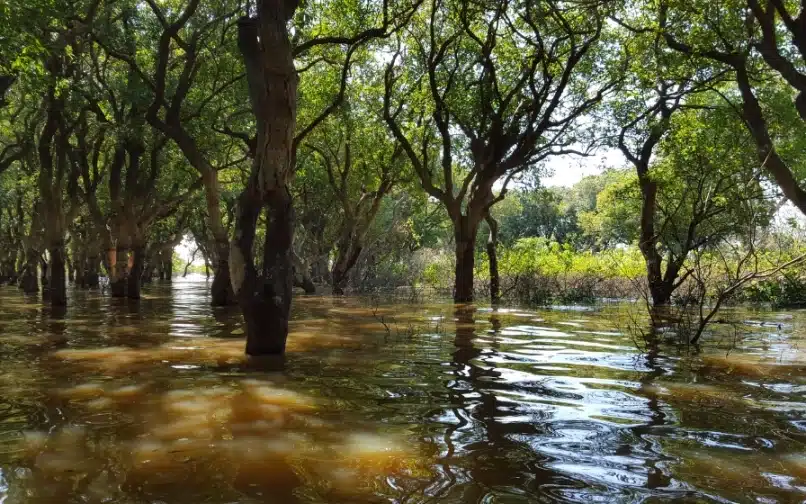
DONATE TO NGOF Verified for authenticity Learn More IMPACT PROMISE Our Partners are carefully selected due to their high conservation impact Partner Snapshot Partner Name NGO Forum on Cambodia (NGOF) Location: The Chrolong fishery community, the Preynop district, and the Sihanoukvile province (Cambodia) Appeal Category: Community Support and Development Ecotourism Reforestation Key Species: Mangrove Sea Dolphin Ell Challenges And Threats: Mangrove deforestation Land encroachment Wastewater pollution of the environment from near communities Actions: Capacity development Environmental site management and strategic planning Nursery management and tree planting Hospitality and ecotourism services The Challenge The coastal communities of Cambodia, located in a region abundant with natural resources and biodiversity, are facing significant environmental conservation challenges. Community leaders and local authorities lack the capacity to manage these areas effectively and illegal fishing and deforestation are prevalent, driven by the financial struggles many community members face. The community has very limited financial resources to support patrol efforts to protect its natural resources and biodiversity. Urgent Solutions Their urgent solutions include: Policies and Laws Influence (PALI): NGO Forum on Cambodia collaborates closely with citizens to gather their input on new laws and policies, and engages with policymakers to discuss key recommendations. The goal is to ensure that new bills and policies are inclusive and cause no harm to nature or society. Promoting Solidarity Actions for Community Harmonization and Sustainability (SACHAS): NGOF works with all stakeholders at the grassroots level to assess their capacity and resources, both natural and man-made. This initiative also provides capacity-building support and financial resources to help communities pursue sustainable development while protecting and conserving natural resources and biodiversity, locally and beyond. Strengthening Resilient, Innovative, and Transformative Institutions (RITI): NGOF supports grassroots and community-based organizations, along with civil society groups, to strengthen their capacity in organizational development, program design, resource mobilization, and advocacy. Once empowered, these organizations can effectively contribute at both policy and community levels, promoting natural resource and biodiversity conservation alongside long-term livelihood development. Why Your Donation Matters It is essential to strengthen NGO Forum on Cambodia’s capacity to manage and conserve natural resources and biodiversity. This will help protect and increase many populations of Cambodia’s endangered species. Additionally, the livelihoods of community members will improve through ecotourism activities and sustainable development. Mangroves absorb carbon and contribute to climate change resilience. By supporting this effort, you will play a key role in creating a lasting legacy for both nature and humanity. Partner Qualifications IUCN Member Verified Partner Legally Constituted Top Accountability Effective Impact Conservation Action Heroes
Applied Environmental Research Foundation (AERF)
DONATE TO AERF Verified for authenticity Learn More IMPACT PROMISE Our Partners are carefully selected due to their high conservation impact Partner Snapshot Partner Applied Environmental Research Foundation (AERF) Location India Category Community Support & Development Ecosystem Restoration Wildlife Conservation Urgent Appeals Save 1,000 Giant Trees in the Western Ghats Date Founded 1995 Website www.aerfindia.org Partner Qualifications IUCN Member Legally Constituted Effective Impact About AERF Since 1995, AERF has been achieving on-the-ground conservation in the Western Ghats, a global biodiversity hotspot, with the active participation of local communities. AERF implements its conservation strategies through five key programs that effectively engage diverse stakeholder groups: 1. Sacred Groves Conservation 2. Applied Biodiversity 3. Communities, Conservation 4. Green Entrepreneurship 5. Business and Biodiversity AERF pioneered incentive-based conservation of privately owned forests in India. In 2007, they launched the MyForest initiative to expand conservation efforts. Through this initiative, AERF has successfully prevented deforestation and conserved globally threatened species across 15,000 acres of privately owned, biodiversity-rich forests in the northern Western Ghats. Additionally, AERF has scaled sacred grove conservation—traditionally protected old-growth forest fragments—across 150 villages in three districts, helping protect endangered species such as the Great hornbill, Indian ground pangolin, Asiatic wild dog, White-rumped vulture, Indian leopard, and Indian gaur. AERF is also responsible for establishing India’s first FAIRWILD certified operation, Nature Connect India Pvt. Ltd. This initiative has brought approximately 7,500 acres of biodiversity-rich forests under sustainable management. This approach has provided sustainable income to local communities while creating inclusive and transparent supply chains for global companies. Their Challenges AERF operates in the open forest landscapes of the northern Western Ghats in Maharashtra. Approximately 90% of the forest areas in this region are owned and managed by local communities. As a result, there is immense pressure on natural resources, as selling land for resort construction and large-scale deforestation due to agricultural expansion are common strategies adopted by locals to generate quick income. This has a significant negative impact on biodiversity and the delivery of ecosystem services. The lack of skills and capacity among locals has led to the overexploitation and indiscriminate felling of economically important trees, reducing the economic productivity of the forests and creating a cascading effect on lesser-known species that depend on these trees. Furthermore, forest degradation results in landslides and wildfires, bringing the entire ecosystem to the brink of collapse and posing an existential threat to local communities. Their Approach AERF focuses on conserving biodiversity-rich forests in the northern Western Ghats through a community-driven, incentive-based approach. Working closely with local communities, AERF implements strategies that prioritize the sustainable management of privately owned forests, which make up the majority of the region’s forest areas. AERF’s MyForest initiative has successfully conserved 12,000 acres of private forests by offering incentives to landowners, promoting sustainable practices, and ensuring biodiversity preservation. AERF also emphasizes the restoration of sacred groves, traditionally protected old-growth forest fragments, and improving landscape connectivity between these critical areas. By engaging communities in sustainable forest management, AERF addresses deforestation and overexploitation of key resources. Their FAIRWILD certified operation, Nature Connect India Pvt. Ltd., further supports these efforts by creating forest-based value chains that provide sustainable income to over 500 community members. This initiative currently manages 7,500 acres of biodiversity-rich forests under sustainable practices. Through their innovative, community-focused approach, AERF ensures the long-term conservation of critical ecosystems while supporting local livelihoods. Why They Need Your Help Advancing conservation within a social context and ensuring its sustainability at scale requires long-term financial support and investment. Donations will be crucial in renewing conservation agreements for another 10 years. Depending on the level of support, these funds can help AERF protect an additional 500 Giant trees and expand value chains under the MyForest initiative. AERF has developed diverse approaches to achieving conservation, aligning their efforts with sustainable economic development for local communities and ecosystem preservation as part of climate change mitigation. With financial backing, they are committed to delivering high-quality, impactful conservation outcomes.
RSPN Bhutan
DONATE TO RSPN BHUTAN Verified for authenticity Learn More IMPACT PROMISE Our Partners are carefully selected due to their high conservation impact Partner Snapshot Partner Royal Society for Protection of Nature (RSPN) Bhutan Location Bhutan Category Community Support and Development Capacity Building and Training Endangered Species Urgent Appeals Save Bhutan’s White-bellied Herons From Extinction Date Founded 1987 Website www.rspnbhutan.com Partner Qualifications IUCN Member Legally Constituted Effective Impact About RSPN Bhutan RSPN Bhutan was established in 1987 under the command of His Majesty, the Fourth King of Bhutan, as a citizen-based non-governmental organization dedicated to the conservation of the Kingdom’s environment. Her Majesty, the Queen of Bhutan, is the current Royal Patron of the organization. RSPN Bhutan is managed by seven Board Directors, with the Executive Director serving as the head of the organization. RSPN Bhutan supports and oversees conservation programs as a complementary effort to government initiatives, using a systematic approach to implement sustainable solutions to emerging environmental challenges through innovation, citizen engagement, environmental education, and empowerment. RSPN currently focuses on six areas: Species and Habitat Wetland and Freshwater Environmental Education Sustainable Livelihood Waste and Pollution Climate Change Adaptation and Resilience These six areas were developed based on national and international priorities and are aligned with the Sustainable Development Goals (SDGs), which are interconnected and interdependent in nature. RSPN Bhutan’s conservation efforts have been recognized by several awards, including the MacArthur Award for Creative and Effective Institutions in 2010, the National Order of Merit (Gold) by His Majesty the King of Bhutan during the 109th National Day celebration in 2016, the ADB Civil Society Partnership Award in 2017 in Yokohama, Japan, the SDG Achievers and Leaders Award in Thimphu in 2018, and the Energy Global Award from Advantage Austria and the United Nations Industrial Development Organization in 2020. Their Challenges The greatest challenges RSPN Bhutan faces are a lack of funding and limited capacity of their facilities in addressing the conservation of Bhutan’s biodiversity and socio-economic impacts of climate change. Some of the specific challenges are: Habitat fragmentation and degradation due to developmental activities in the country Poverty Human-Wildlife conflicts Subsistent farming Limited support from International donors Limited resources and infrastructure to support ex-situ conservation and breeding program of White-bellied herons Lack of conservation awareness among citizens Impacts of climate change on biodiversity and communities Their Approach RSPN Bhutan uses nature-based solutions to address conservation with six focus areas. They prioritize the conservation and protection of the White-bellied Heron and Black-necked Crane. RSPN also leads environmental education programs, promoting awareness and advocacy for environmental issues amongst citizens. They collaborate with communities on sustainable development initiatives that enhance livelihoods and foster active participation in conservation projects. Some examples of their conservation projects are: Conducting annual White-bellied Heron and Black-necked Crane surveys to track population dynamics within their habitats and ecosystems Restoring degraded habitats and lands Engaging communities in the conservation and management of the six thematic focus areas Managing watersheds and springsheds Mitigating human-wildlife conflicts through electric, barbed wire, and natural stone fencing Promoting high-end climate-smart agriculture (both crop and livestock) to enhance the livelihoods of local communities Creating nature clubs in schools Promoting eco-tourism in Black-necked crane and White-bellied heron habitats Conducting environmental education, awareness, and advocacy for all citizens on pressing environmental issues (waste and pollution, freshwater and wetlands, climate change, etc) Youth engagement and formation of youth groups for agriculture and livestock production to increase livelihood opportunities for local communities Ex-situ conservation of the White-bellied heron in conservation and breeding centers as part of population restoration programs Leading climate-smart drinking projects and kitchen-garden irrigation facilities for rural communities Why They Need Your Help RSPN Bhutan works tirelessly to lead critical conservation activities. They do not receive financial support from the Royal Government of Bhutan and have relied on international donors for the past 37 years. However, it is becoming increasingly difficult to secure these resources without strong international partnerships. By collaborating with organizations like Conservation Allies and receiving support from international donors, RSPN Bhutan can continue its critical conservation efforts, setting an example for other national and international partners to follow.
NGO Forum on Cambodia
DONATE TO NGOF Verified for authenticity Learn More IMPACT PROMISE Our Partners are carefully selected due to their high conservation impact Partner Snapshot Partner NGO Forum on Cambodia (NGOF) Location Cambodia Category Ecosystem Restoration Capacity Building and Training Government Policy Urgent Appeals Save The Mangroves of Cambodia Date Founded 1985 Website facebook.com/ngoforumoncambodia Partner Qualifications IUCN Member Legally Constituted Effective Impact About NGO Forum on Cambodia (NGOF) Since the mid-1980s, NGOF has demonstrated its ability to respond to the issues of greatest importance to its members and partners, and, most importantly, to support responsible and sustainable development in Cambodia that benefits all Cambodians. In its new strategic plan for 2024-2030, NGOF envisions a peaceful, inclusive, prosperous, and sustainable society and planet for all. Their priorities include: Inclusive and Green Growth for All: Key areas under this priority are cross-cutting development issues, transparent and accountable public financial management (PFM), fair and green finance, food sovereignty, agri-business, and free trade. Climate Change Resilience and Natural Resource Governance: Focus areas include climate change mitigation and adaptation, climate finance, biodiversity protection and restoration, land governance, water governance, forest governance, fishery management, and aquaculture management. Just energy transition and mining will also be explored during the strategic plan implementation process. Vibrant, Resilient, Innovative, and Impactful Civil Society: Key focuses under this priority include a) strengthening the internal governance and sustainability of NGOF and its members, b) enhancing civic space and creating an enabling environment for NGOF members and partners to engage with the government and other stakeholders on development issues, and c) promoting NGOF membership. NGOF works in partnership with its members, the government, development partners, the private sector, and the people. It is a member of many Technical Working Groups, representing and facilitating CSOs to provide input and engage with the government and development partners at the policy level. NGOF also serves as the secretariat for many CSO Working Groups, representing more than 200 local and international NGOs in addressing common issues. Their Challenges Cambodia is recognized as one of the most resource-rich and biodiverse countries in Asia. However, satellite data and research from various institutions indicate that it also has one of the highest rates of deforestation and species endangerment. Population growth has been significant, and most livelihoods depend on nature. While economic development, particularly in agriculture, agro-industries, mining, timber, and other natural resource extraction activities, has surged, it has led to widespread land grabbing and deforestation. These activities have had negative impacts on natural forests, biodiversity, and social relationships, causing conflicts within communities. Recently, Cambodia has experienced prolonged droughts, heatwaves, and flash floods, making it increasingly difficult for both wildlife and humans to survive. Their Approach As a membership-based organization, NGOF employs rights-based, nature-based, artistic, and multi-stakeholder approaches. Its key interventions are organized into three interconnected strategic activities: Policies and Laws Influence (PALI): NGOF collaborates closely with civil society and citizens to gather input on draft laws and policies. It engages with policymakers to discuss key recommendations, ensuring that bills and policies are inclusive and do not harm nature or society. Promote Solidarity Actions for Community Harmonization and Sustainability (SACHAS): NGOF partners with grassroots actors to assess their capacities and potential. This includes mapping natural and man-made resources, providing development and financial resources as seed funding, and supporting sustainable development and biodiversity protection within communities and beyond. Strengthening Resilient, Innovative, and Transformative Institutions (RITI): NGOF focuses on enhancing the capacity of grassroots and community-based organizations, as well as civil society organizations. This support includes organizational development, program development, resource mobilization, and advocacy. With strengthened capacities, these organizations can effectively contribute at both policy and community levels, promoting natural resource management, biodiversity conservation, and sustainable livelihood development. Why They Need Your Help Your support is crucial in enhancing the capacity to manage and conserve natural resources and biodiversity. With your contribution, endangered species will be protected and their populations increased. Community livelihoods will be improved through ecotourism activities, and mangroves will thrive, contributing to carbon absorption and climate change resilience. By becoming a key actor in this NGOF’s work as a supporter, you will play a significant role in building and leaving a lasting legacy for both nature and humanity.