

Corporación SalvaMontes
Partner Snapshot
Partner
Corporación SalvaMontes
Location
Category
- Endangered Species
- Protected Area Management
- Wildlife Conservation
Urgent Appeals
About Corporación SalvaMontes
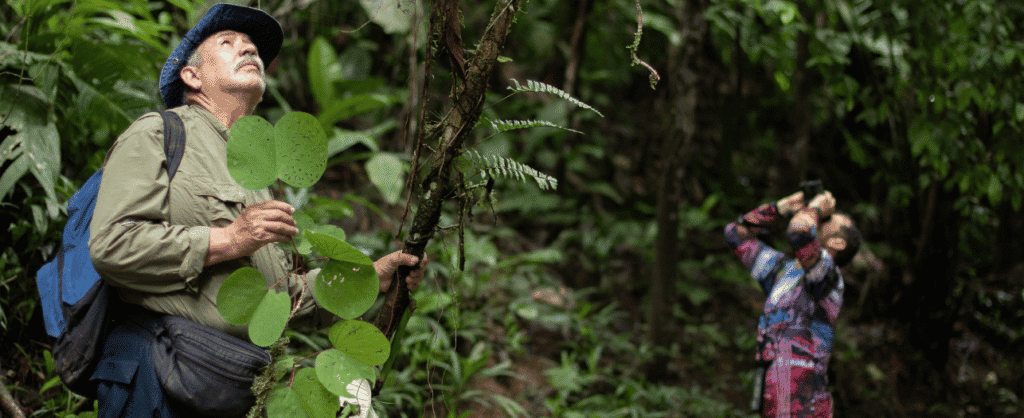
Ten years ago, SalvaMontes Colombia was born out of a specific urgency: to prevent the extinction of some of Colombia’s most endangered magnolias by protecting the last remaining forests where they still survived. What began as a “Colombian Conservation Team,” bringing together scientific knowledge and direct action around these species, evolved into an in situ conservation model focused on protecting strategic territories and restoring endangered species.
Today, they manage a system of five nature reserves that protects more than 3,464 acres across three conservation hubs: Alto de Ventanas (2,330 acres), Altiplano Norte de Antioquia (879 acres), and Darién (123 acres). In these areas, they are working to conserve more than 15 priority threatened species of flora and fauna, integrating habitat protection, scientific research, species recovery, ecological restoration, environmental education, and collaboration with local communities.
During their first decade, they have also contributed to the discovery of more than 12 species new to science and achieved an important milestone: the successful translocation of the Critically Endangered orchid Dracula lemurella, which managed to establish itself and bear fruit at its type locality.
Their Challenges
The ecosystems where they work are home to species with extremely restricted ranges, many of which are threatened and endemic. At the same time, these ecosystems face pressures such as the expansion of livestock ranching, logging, and forest fragmentation, which reduce and isolate the habitats necessary for their survival.
One of their greatest challenges is to prevent this fragmentation from spreading further through the restoration and long-term conservation of the remaining forest patches. In Alto de Ventanas and Altiplano Norte de Antioquia, Key Biodiversity Areas of global importance, the loss of connectivity between these remaining patches poses a direct threat to species that depend on increasingly small and isolated habitats.
Their Approach
They start with an idea that seems simple: to restore a species, they must first protect the place where it lives.
SalvaMontes' nature reserves are the starting point for a broader territorial strategy. From there, they work to expand and reconnect habitats, restore degraded areas, and generate scientific knowledge to guide concrete conservation decisions. In collaboration with local communities and through environmental education initiatives, they seek to reduce threats to ecosystems and strengthen the conditions necessary for the long-term recovery of threatened species.
In Alto de Ventanas, this approach also serves a strategic purpose: to advance the consolidation of a conservation corridor that connects remaining forest fragments and expands the available habitat for priority species.
Why They Need Your Help
Protecting an area doesn’t end. Maintaining rangers in the field, monitoring and recovering threatened species, restoring forests, propagating native plants, conducting research, and expanding Protected Areas requires ongoing resources and a long-term vision.
Your donation helps them maintain and strengthen five nature reserves and 3,464 acres of habitat for threatened species, make progress in the recovery of more than 15 priority species, including Magnolia polyhypsophylla, Dracula lemurella, Atlapetes blancae, and Sabinaria magnifica, restore and reconnect degraded forests to expand the habitat available for biodiversity, maintain a permanent presence in the field through rangers, monitoring, and scientific research, and expand a conservation model that, over the past ten years, has demonstrated that protecting the land can change the future of a species. Every contribution allows SalvaMontes to turn science, experience, and local commitment into concrete actions so that some of Colombia’s most threatened species continue to have a place to thrive.