
Madagascar’s Ministry of Environment and Sustainable Development (MEDD) is releasing the findings of a landmark scientific workshop that will guide the country’s ambitious plan to create new Protected Areas – an effort supported by Conservation Allies, Re:wild, Hempel Foundation, Rainforest Trust, and Campaign for Nature.
In late March 2026, 70 participants – including 50 scientists representing seven major taxonomic groups, 70% of them Malagasy – completed the country’s first comprehensive scientific re-prioritization of terrestrial biodiversity since 1995. The result is a consensus map covering roughly 44.5 million acres of priority land—about one-third of Madagascar—providing government, conservation organizations, communities, and funders with a shared scientific foundation for determining what to protect and where to act first. Within that area, the workshop identified priority zones for new and expanded Protected Areas, ecological corridors to reconnect fragmented landscapes, and for the first time, freshwater ecosystems critical for water security and biodiversity.
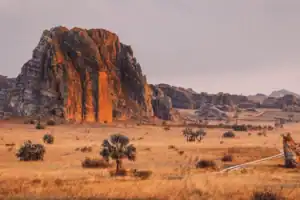
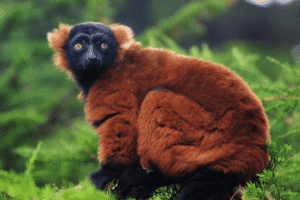
Madagascar covers just 0.4% of the world’s land surface but harbors approximately 5% of all species on Earth, more than 90% of which occur nowhere else. One acre of forest lost in Madagascar has a greater impact on global biodiversity than almost anywhere on the planet. The last time scientists systematically mapped where protection was most needed was in 1995. Thirty-one years later, scientific knowledge has advanced dramatically while pressures on biodiversity have intensified, making this moment both overdue and urgent.
“Madagascar has demonstrated extraordinary leadership by moving from commitment to implementation,” said Dr. Paul Salaman, President of Conservation Allies. “This workshop brought together the country’s leading scientists to answer a fundamental question: where should we focus our efforts to secure the greatest conservation impact? The result is the most comprehensive scientific roadmap for terrestrial biodiversity conservation ever produced for Madagascar, and it gives government, communities, NGOs, and donors a common blueprint for action.”
“In my years working in Madagascar, I have never seen an exercise of this scale or rigor,” said Professor Lily Arison Rene de Roland, lead scientist for the bird group at the workshop. “The gaps we identified are just as important as the sites themselves. They are an honest map of where the next discoveries are waiting to be made.”
“What stood out to me from the workshop was not just the science, but who was doing it,” said Dr. Steven Goodman, MacArthur Field Biologist at Chicago’s Field Museum of Natural History and Association Vahatra. “A generation of Malagasy scientists now leads this work, building on decades of international collaboration to produce something that is genuinely their own. That transition in scientific leadership is as significant as the findings in this report.”
In February 2026, the Government of Madagascar designated 21 new Protected Areas covering 4.5 million acres, bringing the national Protected Area network to 22 million acres. In April 2026, Prime Minister Mamitiana Rajaonarison formally reaffirmed his government’s commitment to the 30×30 Biodiversity Plan – a global goal to protect 30% of the planet by 2030. Through periods of political uncertainty, Madagascar’s commitment to this work has remained steadfast.
“For the first time in more than three decades, we know exactly where to focus our efforts to save Madagascar’s terrestrial biodiversity,” said Alain Liva Raharijaona, 30×30 Coordinator at MEDD. “This workshop has given us that clarity, grounded in the best available science and collectively owned by Madagascar. Now we act on it.”
The findings now feed directly into implementation. The highest-confidence priority areas will be fast-tracked for protection over the next two years, while targeted biological surveys begin filling knowledge gaps that will guide conservation action throughout the remainder of the decade.
The workshop was convened and organized by Conservation Allies in partnership with Madagascar’s Ministry of Environment and Sustainable Development (MEDD), with financial support from Conservation Allies, Re:wild, Hempel Foundation, Rainforest Trust, and Campaign for Nature.