
At least 16 species of lemur live inside a single ribbon of forest running down Madagascar’s eastern escarpment. Five of them are Critically Endangered. All of them depend on the same thing: that the ribbon doesn’t break.
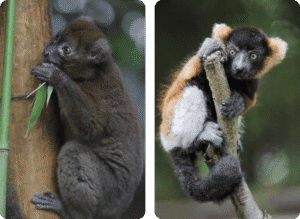
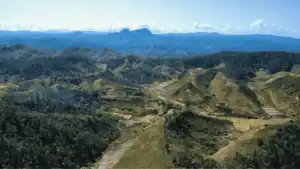
The Corridor Forestier Ambositra–Vondrozo—COFAV for short—stretches more than 776,000 acres across four regions and ten communes of Madagascar’s eastern escarpment. It is one of the country’s most biologically important Protected Areas, and one of the most strategically positioned: it links forest blocks that would otherwise be isolated islands, keeping the corridor’s wide-ranging species connected to enough habitat to survive.
A Refuge for Madagascar’s Rarest Lemurs
COFAV is one of the last places on Earth where the Critically Endangered Greater bamboo lemur still hangs on. The species depends on bamboo-rich rainforest that exists in only a handful of remaining strongholds, and the corridor is one of them. Alongside it live four other Critically Endangered lemurs, all dependent on the kind of connected, intact forest COFAV provides.
For wide-ranging primates, connectivity is not a luxury. It is what allows populations to find mates, migrate as conditions change, and remain viable over time. Lose the corridor and you lose connectivity for half a dozen species the world won’t get back.
Strengthening Protection on the Ground
In April 2026, Conservation Allies funded a strategic coordination meeting in Manakara that brought together every institution responsible for protecting COFAV. Around the table were the Fitovinany Region, Ikongo District, the Manakara court, the gendarmerie and military, mayors of the surrounding communes, VOI (local community management) representatives, and the NGOs operating inside the corridor.
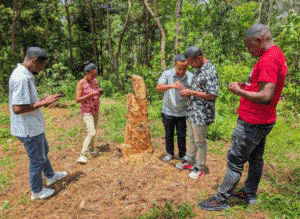
The result was a shared operational plan for COFAV’s Conservation Brigades: faster authorizations from the regional environment office, clearer responsibilities across agencies, and a tighter commitment from law enforcement to mobilize quickly when conservation patrols need backup. Coordinated like this, the brigades can respond to illegal activity in time to actually stop it.
Two Local Partners, Continuous Coverage
Conservation Allies is directly supporting two local conservation organizations operating inside COFAV: Ny Tanintsika and the Miaradia Association. With both teams active across the corridor, patrol coverage is now continuous across the entire Protected Area—no single team has to carry the whole landscape on its own.
That continuity matters. Illegal clearing tends to happen in the gaps between patrols. Closing those gaps—with local teams on the ground and law enforcement aligned behind them—is what gives the corridor’s lemurs the breathing room their populations need to recover.
Why It Matters
COFAV is not the kind of place most donors will ever visit. It doesn’t have the cinematic profile of Madagascar’s rainforests on the tourist circuit. But by almost any biological measure, it is irreplaceable—a refuge for some of the most endangered primates in the world, held together by the protected status of a single connected forest landscape.
With direct support flowing to local partners on the ground, law enforcement coordinated with conservation patrols, and an operational plan that connects every institution responsible for the corridor’s future, COFAV’s protection is more robust now than it was a year ago. The work to keep it intact—patrol routes, permits, prosecutions, monitoring—is exactly the kind of work that determines whether a forest still exists in 2030.