
Three years ago, a Shuar Indigenous community in southern Ecuador set out to defend their forest with science. They now have the data to prove it worked.
The Maikiuants, a Shuar community in the gold-mining frontier of Morona Santiago province, have spent the last three years working with Ecoforensic and the University of Azuay on a pilot project that paired Indigenous land governance with rigorous biological monitoring. Conservation Allies was a key funder of the work. As that project wraps up, the community’s paraecologists and their academic collaborators have arrived at a single quantitative finding that summarizes the rest: more than 80% of the Maikiuants’ territory remains in primary forest.
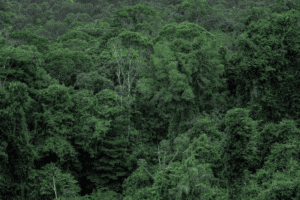
In a region under constant pressure from expanding mining concessions, that number is not typical. It is what success looks like.
What The Pilot Proved
The framework was simple in concept and complex in execution. The community’s life plans—the locally authored documents that codify how Shuar territory is used, managed, and defended—provided the governance backbone. Trained paraecologists from inside the community ran the science: drone mapping, camera trap surveys, biodiversity assessments, and documentation of land-use change. Two graduate theses, including one from the University of Sussex, are now being developed into academic papers, and the work is positioned to anchor future Rights of Nature legal cases under Ecuador’s constitution.
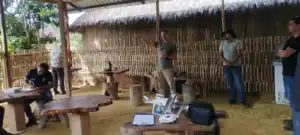
The takeaway, according to Ecoforensic’s founding director Mika Peck: when Indigenous governance and ecological evidence are built side by side, both grow stronger. The life plans direct what the science measures. The science makes the life plans defensible in court.
A Research Center On The Way
The most consequential outcome of the three-year pilot isn’t going onto a final report. It’s being put into action.
In 2027, the Maikiuants and their partners will begin co-designing and building the Shuar Arutam Scientific and Cultural Center—a permanent research station inside the territory designed to host transdisciplinary work that bridges Indigenous knowledge and academic science. The Center is a significant step for the Shuar communities, opening new opportunities for higher education, cultural continuity, and long-term ecological research in one of the most understudied stretches of the western Amazon.
Conservation Allies’ funding of the pilot phase made the transition to the new Center possible—the next three years will be shaped by the community and academic partners on the ground.
What’s Next
The immediate next step is smaller in scope, larger in implication.
With Conservation Allies’ support, the Maikiuants are expanding a camera trap program across the territory: a rigorous baseline of population estimates for Jaguars and other large mammals, paired with documentation of incursions onto Shuar land.
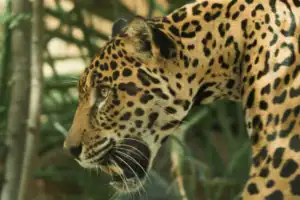
The conservation value of that data is obvious. The legal value may be larger. Under Ecuador’s constitutional Rights of Nature framework, ecosystems themselves can be represented in legal proceedings—but cases turn on evidence. A multi-year camera trap dataset showing a stable Jaguar population is admissible proof that the territory functions as a viable ecosystem, and that mining incursions are damaging something the constitution protects.
Looking Ahead
The political landscape in Ecuador has shifted, and the Maikiuants’ work is happening under conditions that are anything but stable. But the underlying model—community-authored life plans, paraecologist-led monitoring, university partnerships, and Rights of Nature litigation—is now too well-evidenced to dismiss. The first three years answered the question of whether it works. The next three will determine how far it scales.