
New Hope for Madagascar’s Imperiled Forests with First-Ever Conservation Command Center Launch
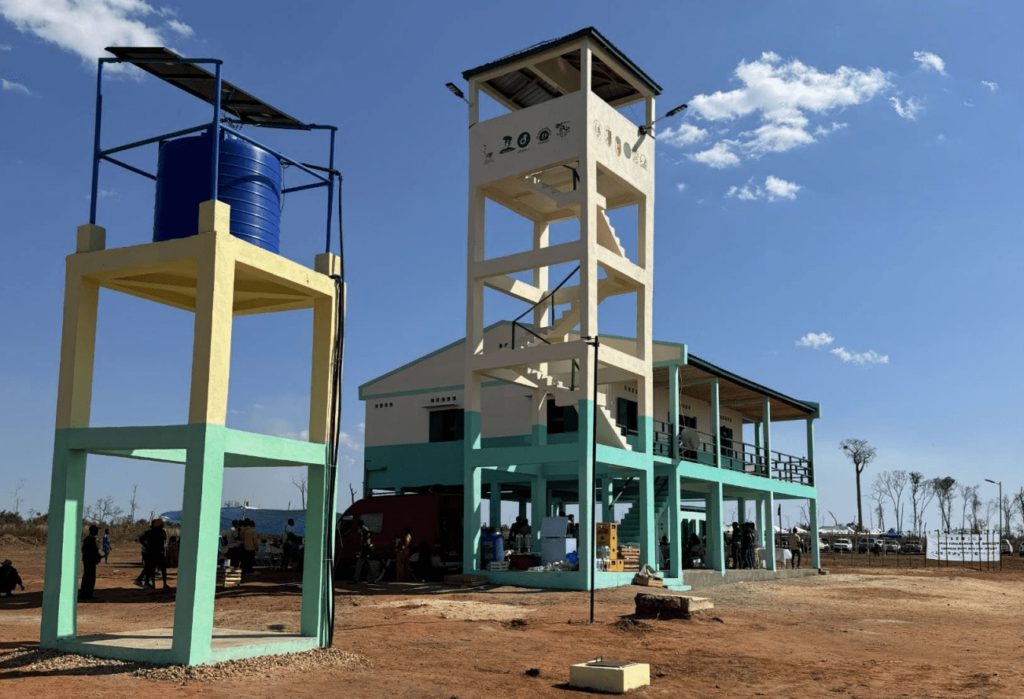
The first-of-its-kind, the Command Center is strategically located to repel a wave of illegal colonists clearing the forest of the Protected Area to grow corn and peanuts for export. Based in the zone of greatest challenges, the Command Center significantly improves the efficiency and success of patrolling operations. Named for a local warrior hero Andradrangy, the Command Center was inaugurated on 15th July and immediately became the central hub for our Protected Area enforcement teams called Mixed Brigades, composed of rangers, law enforcement officers, and local people. Previously, patrols were exceedingly challenging due to the lack of infrastructural support to access areas confronting deforestation. Now, with the amenities of this new facility—including a watchtower, clean water from a deep well, a kitchen and cook, Starlink WiFi, and comfortable beds—rangers have the resources they need to conduct their crucial work and respond rapidly to threats, maintaining a stronger presence in critical areas. Importantly, this first-of-a-kind Command Center for Madagascar represents a monumental advancement for national efforts to thwart the growing pressures on the country’s precious Protected Areas. The inauguration made national headlines and established an example that other Protected Areas facing crises are eager to replicate. Your generous support has made this achievement possible. By providing an equipped home base for Malagasy rangers, you are directly contributing to the conservation of Madagascar’s biodiversity. Your support is not just building facilities—it’s building the foundations for a future where nature can thrive. We thank Fanamby for constructing the Command Center and many partners involved in Menabe Antimena: Madagascar National Parks, USAID, US Embassy, Madagascar Protected Areas and Biodiversity Fund (FAPBM), Hempel Foundation, CNFEREF, UK Embassy, Alliance Voahary Gasy, Madagasikara Voakajy, IUCN, Durrell Conservation Trust, Ministry of the Environment and Sustainable Development (MEDD), Commandant de Groupement (Gendarme), Commissaire Principal de Police, and Commandant des zones de défense et de sécurité de Tsiribihana (Military) and many others.
New funding to save Protected Areas in Peril in Madagascar
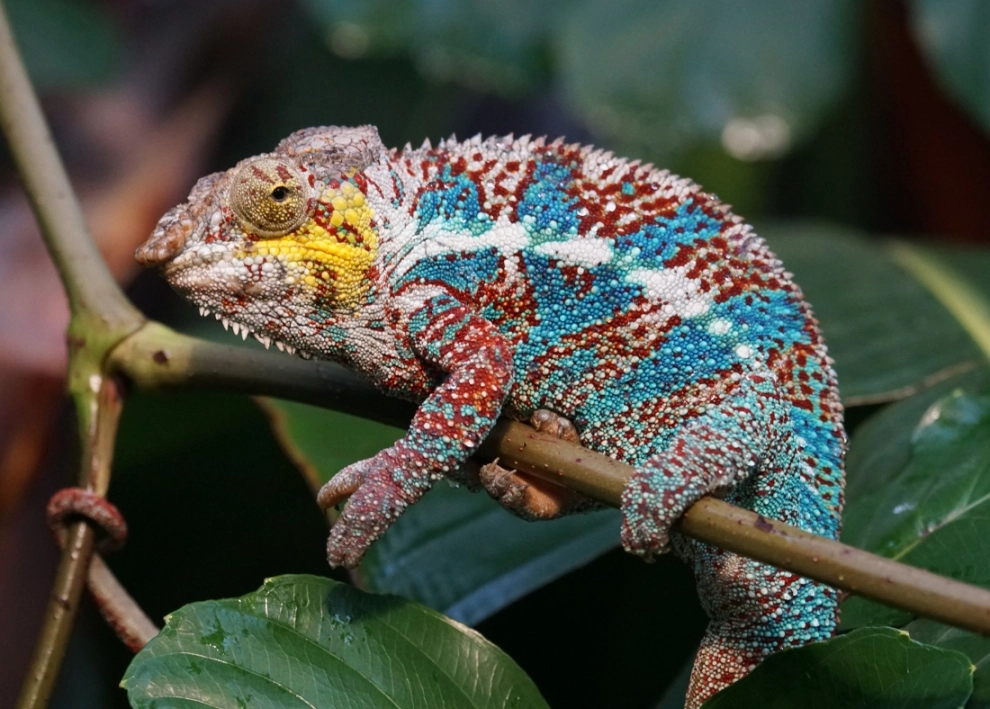
As one of the top ten poorest countries in the world (Global Finance 2024), Madagascar has the greatest concentration of biologically unique wildlife on earth. Much like Hawaii and New Zealand islands, human colonization of Madagascar only occurred in the last two millennia. Since then, its spectacular wildlife and the majority of its forests have steadily disappeared. Today, the 111 terrestrial Protected Areas in Madagascar cover 14.1% (20.5 million acres) of the country but, due to illegal activities, they have already lost more than half of their original forest cover as of 31 December 2023. The surviving 9.6 million acres of primary forest inside Protected Areas represent just 6.6% of the country – an area equivalent to the size of Puerto Rico. It is imperative to save these forests! They not only represent the last refuge for tens of thousands of endemic and at-risk species, but these forests are the best hope to ensure water resources for the country’s most important rice-growing regions (Madagascar eats more rice per person per day than nearly any other country). …The stakes for threatened wildlife and impoverished human populations could not be higher! As a small NGO working worldwide, Conservation Allies recognizes the priority and urgency in Madagascar. Over the last decade, we have grown our support and partnership here and focused our limited funding towards the Protected Areas with the highest deforestation rates. Over the past 20 years, almost half (49) of the 111 PAs have experienced continuous deforestation that will likely result in total forest loss within 50 years if no additional interventions are taken to save these forests Unlike some organizations with prescribed actions to fund, we listen to our local Malagasy partners and experts in what support is most needed to avoid deforestation and save the Protected Areas. Local conservation organizations seek the most support for their on-the-ground patrollers and law enforcement to provide safety for all. In early April 2024, Conservation Allies requested proposals from 29 partners, mainly local Malagasy NGOs. These proposals were received and reviewed by mid-May. By late May, thanks to our supporters, we were able to wire grants totaling $745,376 directly to our partners in Madagascar to protect 39 reserves and parks encompassing 7.1 million acres of forest (over ⅓ of all Protected Area forests). This represents a further increase over 2023 funding thanks to our wonderful donors, whose generous support continues to rise every year since 2019. We congratulate our partners for the magnificent work they do – we’re proud to support them as they continue their tremendous efforts toward saving Madagascar’s wonderful wildlife and people.
Avisoa’s Journey: From Deforestation to Dignity in Madagascar
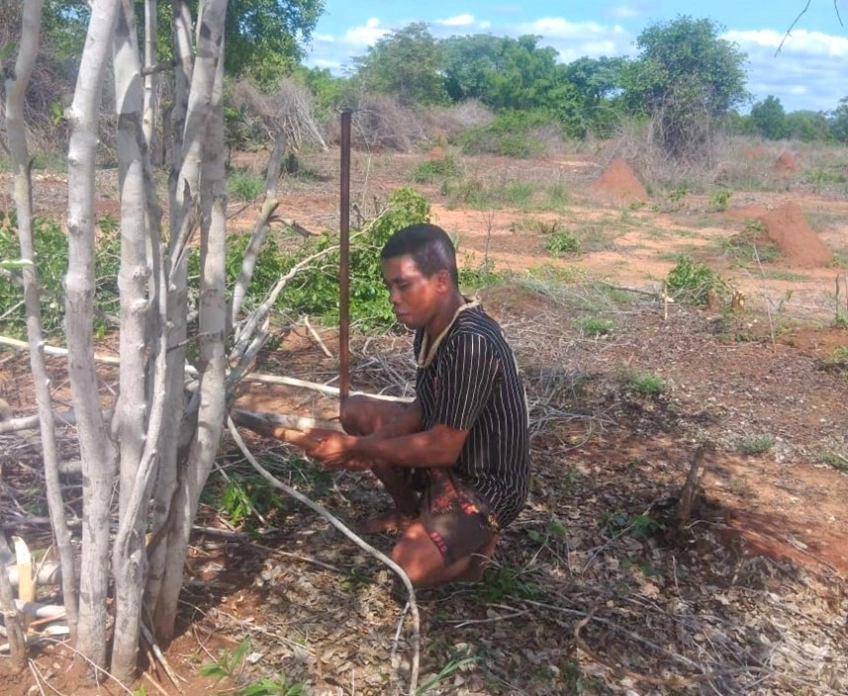
Tropical forests in protected areas are often illegally invaded by people because of their seemingly “free” land and natural resources. As a result, they are prone to deforestation due to the increased demand for timber and land to grow and sell crops, together with rapid population growth that puts immense pressure on natural resources. There is no better example than the Menabe Antimena Protected Area in West Madagascar where large numbers of migrants have been illegally entering the reserve, clearing its forests to plant corn and peanuts. Menabe Antimena is one of the most biodiverse areas on the planet, with three species being found nowhere else on Earth (including the smallest primate in the world, Madame Berthe’s mouse lemur). Despite this, over 50% of Menabe Antimena forests have been lost in just 15 years. Mikajy is an initiative funded by USAID, where they are partnering with local authorities and communities to tackle this crisis in Menabe Antimena Protected Area. USAID has helped designate 15,170 acres of unused, non-forest state lands, known locally as Bezeky and situated 20 miles south of the reserve, for green titling, offering migrants who choose to relocate to Bezeky farmable land and other benefits. Each migrant family relocating to Bezeky will receive five acres after four years of farming the land. USAID supports a generous livelihood package, including agriculture and alternative revenue-generating activities. In addition to receiving farmable land, these families are given access to, sustainable agriculture training, water from boreholes, social services, technical support, and support in selling their produce. With such supports in place, the migrants will be able to invest in their land and enhance its productivity, rather than resorting to degrading the Protected Area. Unfortunately, the Bezeky area was often frequented by bandits who stole from local communities. Therefore, an armed military/police presence is essential to protect the migrants and encourage them to relocate to Bezeky. Conservation Allies provided emergency support for Project Mikajy through our partner Madagasikara Voakajy to mobilize military protection at Bezeky and ensure safety for the first 200 migrant families who voluntarily relocated here. Among them, 25-year-old Mr. Avisoa Fidèle Randriamanana, originally from southern Madagascar, traveled with his wife and two small children to Bezeky. Before relocating, Avisoa lived inside Menabe Antimena Protected Area, where he made a living from illegal slash-and-burn cultivation in the forest. This family was determined to make a change for the better. He is hopeful that his new property will allow him and his family to live with dignity and security on their own land, not continually hiding and dodging protected area patrols. Demonstrating his conviction, he and his family walked on foot from Menabe to Bezeky. With the support of USAID, he has already built his new home and started to develop his farm. Avisoa explained, “We had witnessed the degradation of the Menabe Antimena forest. Certainly, we did not own any land and I admit that we cultivated in the protected zone. We heard that there would be support and cultivation plots to distribute in Bezeky, so I decided to go there, even without transport. I wanted a chance to get my own land and start a new life.” Like all the other 199 family beneficiaries, Avisoa received 5 acres of ”Green Title” agricultural land which he will own outright after four years of caring for it. The goal of Mikajy is to relocate thousands of migrants to Bezeky, protecting the beautiful forests and wildlife of Menabe Antimena.
From logger to conservationist: Ronaldo’s story
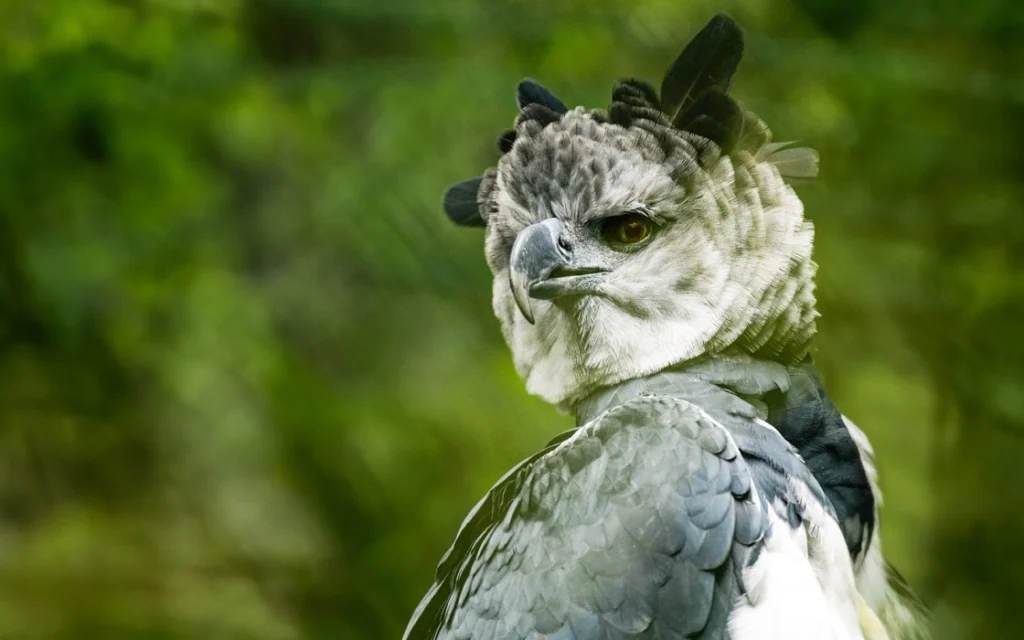
Ronaldo grew up surrounded by the rainforests of northern Ecuador, where he worked alongside his brothers transporting felled trees out of the forests to be milled into lumber. As this was the line of work of his parents before him, it seemed the natural way of life to Ronaldo— that is, until a special encounter he had that changed the direction of his life. In 2018, Ronaldo’s girlfriend introduced him to our partner organization, Reserva Tesoro Escondido, the primary force protecting this region of rainforest, known as the Chocó Lowland Forest. Tesoro uses many modalities to protect the forest, including habitat restoration, boosting local scientific research, environmental education for community members, sustainable development and women empowerment projects, and peaceful human-wildlife conflict solutions. After his initial visit to the reserve, Ronaldo was inspired by what he had seen and wanted to get more involved with the project. He began attending Tesoro’s parabiologist workshops, training to become a research assistant. To encourage participation from the local community, stewarding a future where the environment is protected by its residents, Tesoro offers this training for free. One summer day, while Ronaldo was completing a survey on the monkey populations in the area, he was stunned by the spotting of an impressive, unusual creature in the trees— a Harpy eagle. Harpy eagles are globally considered to be Vulnerable, and in much of their range, including the Chocó Lowland Forest, they are becoming increasingly rare. Harpy eagles, and many other raptors of Latin America, are threatened by two dominant forces: deforestation, mainly driven by expanding cattle-ranching, and hunting. People living in the forest and its surroundings often shoot birds-of-prey, for fear that their livestock will be preyed upon. Through their numerous conservation projects, Reserva Tesoro Escondido is working to end the destruction of northern Ecuador’s rainforests, with a particular emphasis on preserving and restoring bird biodiversity. Since his encounter with the Harpy eagle, Ronaldo, like many others who have been influenced by Tesoro, transitioned from a life of working against the environment to one where he actively endeavors to protect it. By involving the community in important conservation work, Tesoro is creating ripple effects of change across Ecuador, leading us closer and closer to a sustainable, green planet where all beings can thrive. Reserva Tesoro Escondida relies on international support to continue their conservation programs, including free environmental education and conservation training to locals who wouldn’t be able to afford the cost of tuition. If you would like to support Tesoro, please donate here.
Endangered Species are Returning to this Community Managed Lake in Madagascar

Through initiatives such as wildlife patrols, sustainable management practices, and community engagement, Impact Madagascar has successfully reduced human-induced disturbances and restored much of Lake Anjikely’s natural equilibrium. Their comprehensive approach and ongoing management of the area have contributed to the resurgence of biodiversity in the lake, making for a more balanced and resilient ecosystem. The presence of Malagasy pond herons and Madagascar big-headed turtles not only demonstrates the resilience of these species, but also emphasizes the importance of collaborative, locally-led conservation work. Continued partnerships with organizations like Impact Madagascar offer hope for the continual preservation and restoration of Madagascar’s unique biodiversity. Impact Madagascar needs your help! They are in the last push to raise funds for their ongoing community project. By donating, you will play a key role in helping provide local communities with the tools and resources they need to live sustainably alongside their natural surroundings, leading to a better world for both humans and wildlife.
Conservation Action Award Fights Environmental Crimes and Corruption in Madagascar’s Vohibola Forest
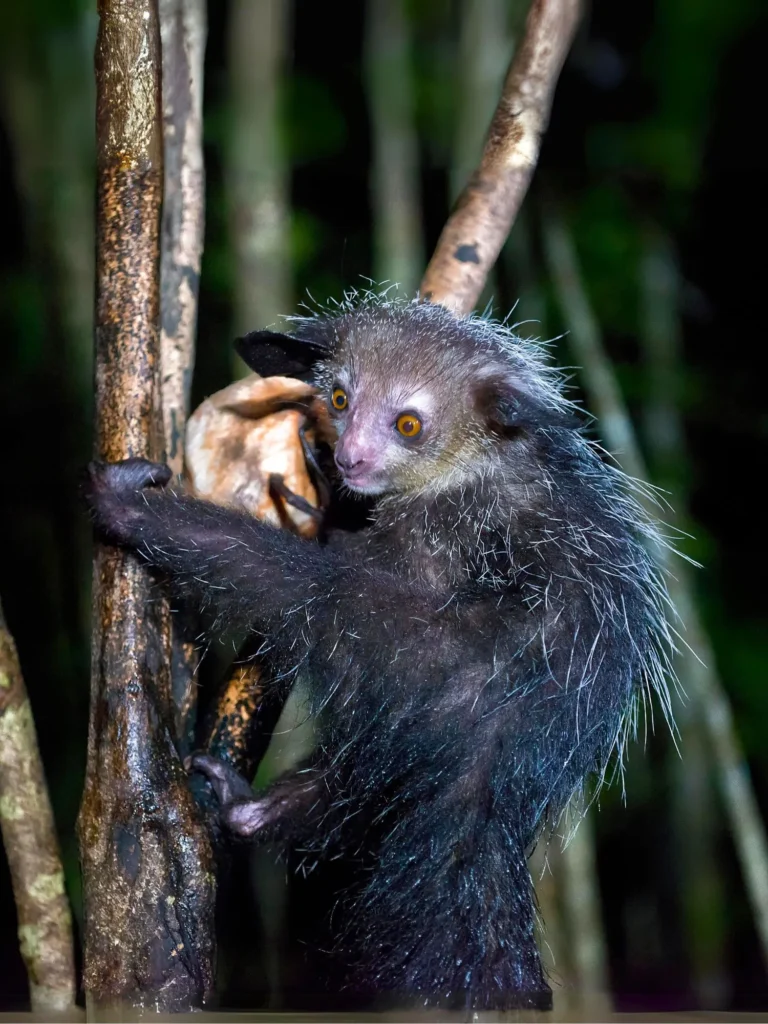
Responding to the urgent call for conservation, the Razan’ny Vohibola Association was established in 2016 by local communities and village leaders. With over 3,000 members from four surrounding villages, the association is dedicated to safeguarding Vohibola while enhancing livelihoods through education and alternative projects. However, limited funding has hampered their efforts, especially in sustaining patrol activities crucial for forest protection. Without ongoing, intensive protection measures, the Vohibola forest faces a dire future. Recognizing the critical need for support, Conservation Allies awarded a Conservation Action Award grant to Razan’ny Vohibola in 2023. We are thrilled to report that this injection of funds enabled increased intensive patrols within the forest, which was crucial for preventing hundreds of crimes against nature. With ongoing financial assistance pledged through 2024, Conservation Allies stands committed to bolstering Razan’ny Vohibola’s conservation endeavors.
Conservation Action Grant protecting Diademed sifakas in Central Madagascar
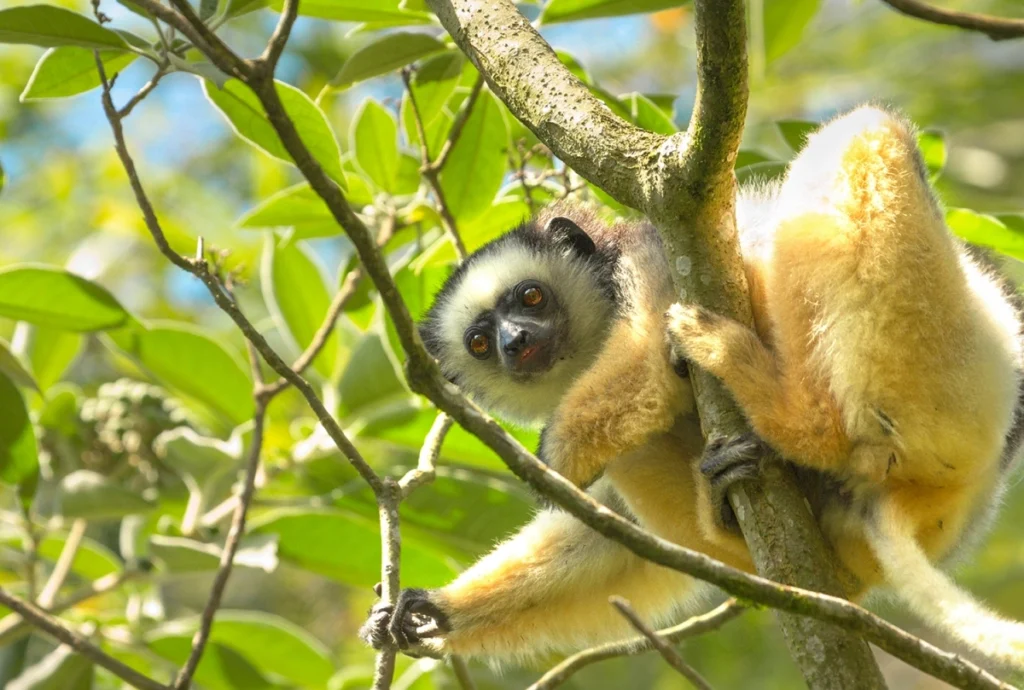
Tragically, the wildlife of Tsinjoarivo-Ambalaomby is threatened by intense human activities, most notably slash-and-burn forest clearance for agriculture. Additional major issues include wildfires, illegal logging, and gold mining. Through strategic support to our local partner SADABE, together with DREDD (the government authority for forests in Madagascar) and regional environmental authorities, we’ve implemented measures to combat the multiple threats facing Tsinjoarivo-Ambalaomby. We awarded a Conservation Action Rapid Patrol Grant to fund increased “mixed brigade” patrols composed of members from DREDD, SADABE, the Gendarmerie Nationale, and local community members. These patrols have yielded tangible results, including the apprehension of criminals engaged in illegal activities such as logging and mining. Through increased conservation enforcement, we’ve effectively curtailed deforestation and unauthorized mining within the reserve. Additionally, our extensive community engagement initiatives have educated and mobilized local residents, fostering a deeper commitment to conservation in the area. While we celebrate these accomplishments, our work is far from over. Conservation Allies remains dedicated to preserving Madagascar’s rich natural heritage, and we continue to collaborate with our partner SADABE to step up mixed brigade patrols across Tsinjoarivo-Ambalaomby Protected Area to ensure the Diademed sifaka and many other species have a home for the future.
A bold “zero deforestation” commitment for Ankarafantsika National Park

Ankarafantsika National Park contains 820 plant species with an endemism rate of 89.3% (meaning they are highly unique to this particular area), including three families of plants that are found only in this park. The park is also home to 37 species of mammals, 70 reptile species, 14 amphibian species (including the Critically Endangered Ankarafantsika Stub-toed Frog), plus the Critically Endangered Coquerel’s sifaka and Golden-brown mouse lemur. Three species of scorpions are only found in Ankarafantsika. From an ecosystems service perspective, Ankarafantsika National Park is the single most important Protected Area in Madagascar as it is a critical water tower that feeds the second most important rice basket in the country— rice being the staple diet for the nation. Tragically, this vital home for wildlife and critical water tank for thousands of rice growers is in danger. In just the past decade, Ankarafantsika National Park has lost almost one-quarter of its forest cover according to Global Forest Watch, including a further 1-2% forest loss in 2023. The main pressures include cutting down trees for timber and charcoal production, which in turn has produced degraded forests that are prone to fires set by local people in order to spread non-natural grasslands for cattle. The challenges here are immense but the stakes for biodiversity and people could not be higher. Conservation Allies has supported efforts at this Park for more than 10 years, but in recent years has increased support to our coalition of partners – Association Fosa, Planet Madagascar, and Madagascar National Parks. The major outcome of the two-day meeting was a collective commitment to zero deforestation— significantly stepping up funding for mixed brigade park protection and law enforcement patrols to stop illegal activities— by the 100th anniversary of the park in 2027.
Unique Andean Cloud Forest Reserve Expands by 445 Acres

Managed by our partner Fundación Cambugán, the Cambugán Protected Forest serves as a crucial habitat for endangered fauna, including the elusive Andean bear, and Ecuadorian squirrel monkey, as well as many endemic plant species. Enveloped by fog on a daily basis, this forest has a research station, allowing conservation research to prosper within this area of Ecuador. The work to safeguard the most biodiverse areas in the world is far from finished. Fundación Cambugan is continuously working to expand protections to more of Ecuador’s forests. It requires a collective effort from all, and each individual contribution counts towards ensuring the longevity of these invaluable ecosystems. With your support, we can continue our mission of supporting our partners in protecting and conserving these vital habitats for generations to come.
Major New Protection for the Chocó Biodiversity Hotspot

Perhaps the planet’s most diverse and unique treasure trove of wildlife is the little known and often overlooked Chocó biological hotspot. This narrow swathe of rainforest is sandwiched between the Pacific coast and high Andes, averaging just 50 miles wide while extending 600 miles from western Colombia to northwestern Ecuador. Covering less than 50,000 square miles (smaller than the State of New York), these lush rainforests are the wettest on earth and contain the highest concentrations of endemic biodiversity found on any continent. Unfortunately, for many decades, the conservation of this region has been overlooked. As a consequence, it remains significantly under-protected (less than 5% is under strict protection) with few controls preventing the large-scale deforestation that is destroying these rainforests at an unprecedented rate. Many endemic birds, plants and amphibians in the Chocó biological hotspot are at risk of extinction. Within this biogeographical region lies the Department of Chocó— a regional province covering almost half of the entire Chocó hotspot of western Colombia. Just 3.7% of the Chocó department land area is strictly protected, with only three small National Parks located along the coast and highest peaks. Yet, the most at-risk, range-restricted species are concentrated in the wettest mid-elevation rainforests between 3,000 to 7,000 feet. The persistent cloud cover and precipitation in this area provides crucial biotic and physiological features to make it a melting pot of unique biodiversity. For example, over 50 bird species and 2,000 orchid species are restricted to this region. Conservation Allies partner, Fundación ProAves, has been active in this region for over 20 years, having established nine nature reserves targeting strict protection for the hotspot’s most endangered species. One of these reserves, named “Las Tangaras,” was established in 2012 within the municipality of El Carmen de Atrato. Its creation followed a biodiversity expedition that unveiled various unique amphibian species for scientific study, including the identification of the endangered Chocó Vireo and Gold-ringed Tanager. Subsequently, ProAves secured support to purchase private forested lands earmarked for new cattle ranches, establishing the first protection of subtropical rainforest in the Chocó department. In recent years, the Reserve has been under intense pressure following the discovery of significant gold deposits around the reserve and a proposed Chinese-owned hydroelectric project. Overwhelmed by gold-miners, ProAves worked with the Regional Autonomous Corporation for the Sustainable Development of Chocó (CODECHOCÓ) to declare the Las Tangaras Reserve as a Regional Natural Park, thereby ensuring permanent protection by the state. In January 2024, CODECHOCÓ made a historic announcement, officially designating Las Tangaras Regional Natural Park, safeguarding 5,722 acres of pristine subtropical rainforest. This declaration represented a significant milestone, marking the department’s first-ever Regional Park and its first officially protected area in nearly four decades. Moreover, Las Tangaras Regional Park stands out as the first Regional Park featuring a dedicated birding and ecotourism lodge. It ranks among the top five most bird-rich sites in Colombia, boasting an impressive 557 species, which equates to over 1 in 20 bird species found worldwide. The historic declaration of Las Tangaras Regional Natural Park was a collaboration between Fundacion ProAves and CODECHOCÓ, with support from American Bird Conservancy, Conservation International, ASOCARS, and Conservation Allies.