
Protected Areas are essential for safeguarding wildlife, but the forests surrounding them are important, too. In western India, privately owned forests outside Protected Areas provide important habitat and allow wildlife to move through the wider landscape.
Conservation Allies’ only partner in India, Applied Environmental Research Foundation (AERF), has spent nearly two decades working to protect these forests.
Since 2007, AERF has worked with landowners and communities to conserve privately owned forests around Protected Areas such as the Sahyadri Tiger Reserve. Through its Myforest initiative, AERF developed India’s first incentive-based private forest conservation program, helping landowners keep these forests intact.
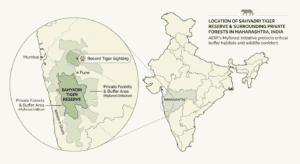
Today, much of the surrounding forest remains privately owned, leaving important habitat vulnerable to development and other pressures. AERF identifies forests facing the greatest threats and works with landowners, local communities, organizations, and scientists to develop conservation agreements that protect these forests while taking local needs into account.
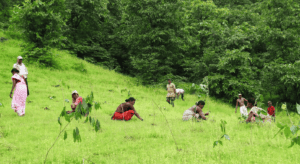
To date, AERF has brought more than 15,000 acres of private forest under long-term protection, including around 5,000 acres surrounding important Protected Areas and wildlife corridors.
Recently, AERF’s field team spotted an Endangered Bengal tiger in one of the forests it has long worked to protect. The sighting is an encouraging sign that these forests continue to provide habitat for at-risk wildlife and help maintain connectivity across the landscape.
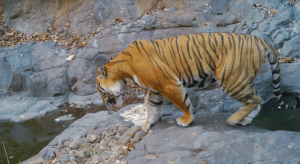
For AERF, the sighting points to a healthier, more resilient landscape. It is not simply evidence that a tiger passed through. It is a reminder of why the less visible work of protecting habitat around Protected Areas matters.