
NATIVA
NATIVA Partner Snapshot Partner Naturaleza, Tierra y Vida (NATIVA) Location Bolivia, Latin America Category Community Support and Development Protected Area Management Wildlife Conservation Urgent Appeals Emergency Wildfire Response and Prevention in Bolivia Date Founded 2003 Website nativabolivia.org Partner Qualifications IUCN Member Verified Partner Legally Constituted Top Accountability Effective Impact Conservation Action Heroes About NATIVA Naturaleza, Tierra y Vida (NATIVA) is a Bolivian non profit that works to protect biodiversity across three of South America’s most important ecological regions—the Chaco, Chiquitania, and Pantanal. They pair science with strong community roots, collaborating with Indigenous communities, local governments, and civil society to safeguard endangered species, support sustainable livelihoods, and maintain ecological connectivity at a landscape scale. Their Challenges Bolivia’s most important ecosystems are under accelerating pressure. Large-scale deforestation, recurrent megafires, climate-induced drought, and illegal settlements are fragmenting habitat and degrading land and water at an alarming pace. Limited institutional capacity and scarce funding leave conservation groups stretched thin—right when rural communities and wildlife need them most. Their Approach NATIVA works at landscape scale, combining satellite monitoring, legal defense of territories, and community-based action. They run wildfire detection and response programs, support environmental governance, build water-resilience infrastructure, and drive policy dialogue, ensuring conservation benefits both nature and the people living alongside it. Why They Need Your Help International support keeps NATIVA’s monitoring systems running, strengthens rapid wildfire response, and powers community-led conservation on the frontlines. Your donation directly protects endangered species, preserves vital ecosystems, and backs the Indigenous and rural communities leading this work.
South Rupununi Conservation Society
South Rupununi Conservation Society Partner Snapshot Partner South Rupununi Conservation Society (SRCS) Location Guyana, Latin America Category Capacity Building and Training Scientific Research Wildlife Conservation Urgent Appeals None currently Date Founded 2002 Website mns.my srcs-gy.com Partner Qualifications Verified Partner Legally Constituted Effective Impact About South Rupununi Conservation Society The South Rupununi Conservation Society are a community-led non-profit with a membership largely consisting of Indigenous Rupununi residents, working across biodiversity research, cultural heritage, environmental education, sustainable livelihoods, and organizational strengthening. Their species programs focus on six priorities—the Red siskin, Giant armadillo, Giant anteater, Yellow-spotted river turtle, Hoary-throated spinetail, and Rio branco antbird. Over two decades they have supported 865,000+ acres of community-managed conservation areas and reached more than 2,000 students with environmental education. Their Challenges Guyana’s forests and biodiversity are under growing pressure. Mining, logging, and the expanding oil and gas sector drive deforestation, soil erosion, and water contamination. In the South Rupununi, changing fire regimes, irregular rainfall, large-scale agriculture, new roads, and overharvesting of wildlife are compounding the strain—all while communities try to balance development with protecting the ecosystems they depend on. Their Approach SRCS use a community-based conservation model that combines scientific research, Indigenous knowledge, and local leadership. Programs are designed and run alongside Indigenous communities, making conservation culturally grounded and durable. Field research on their six priority species feeds directly into practical action—from the community-managed conservation areas on titled Indigenous lands, to bird guide training that links conservation with real income. Why They Need Your Help SRCS relies on external funding to sustain conservation, education, and livelihood programs across the Rupununi. Your support keeps biodiversity research and species monitoring going, powers ranger and guide training, and strengthens youth environmental leadership—keeping community-led conservation alive in one of the most biodiverse regions on Earth.
Emergency Wildfire Response and Prevention in Bolivia
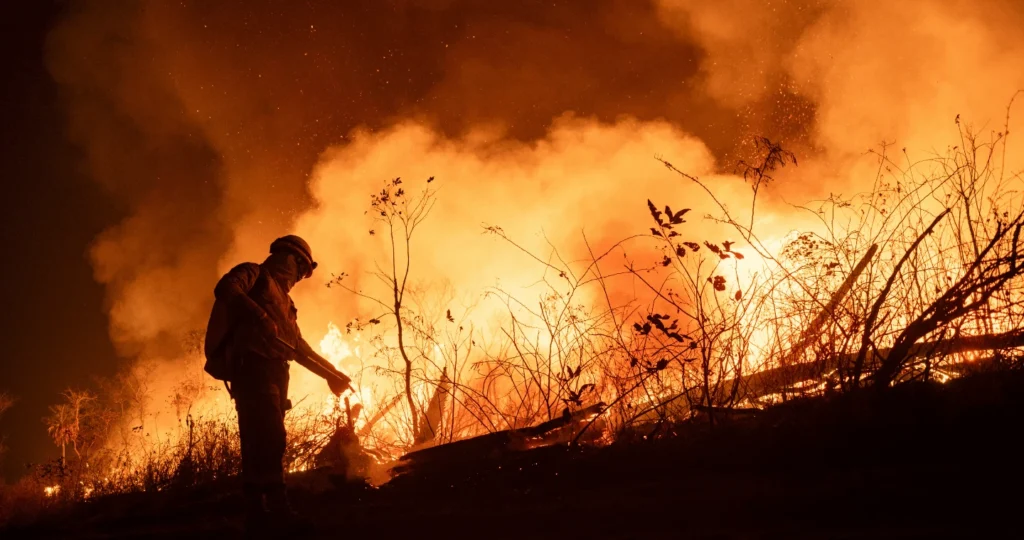
Emergency Wildfire Response And Prevention In Bolivia Bolivia is in the middle of an escalating wildfire crisis. Prolonged drought, rising temperatures, and unsustainable land use have pushed the Chaco, Chiquitania, and Pantanal into increasingly frequent megafires. Each fire season destroys critical habitat, degrades soils and waterways, and puts Indigenous and rural communities at risk. Raised so far $0 Goal $10K 0% funded APPEAL Snapshot Partner Naturaleza, Tierra y Vida (NATIVA) Location Gran Paisajes del Chaco, Chiquitania y Pantanal, Bolivia Appeal Category Protected Area Management Wildlife Conservation Community Support and Development Key Species Jaguar, Chaco peccary, Lowland tapir Partner Qualifications IUCN Member Verified Partner Legally Constituted Top Accountability Effective Impact Conservation Action Heroes The Challenges Bolivia is in the middle of an escalating wildfire crisis. Prolonged drought, rising temperatures, and unsustainable land use have pushed the Chaco, Chiquitania, and Pantanal into increasingly frequent megafires. Each fire season destroys critical habitat, degrades soils and waterways, and puts Indigenous and rural communities at risk. Many protected landscapes still lack the equipment, early-warning systems, and trained brigades needed to contain fires before they spread. Urgent Solutions NATIVA is launching an integrated wildfire prevention and response program. They will strengthen local brigades with specialized training, protective equipment, and logistical support; expand satellite monitoring to detect hotspots in real time; and run awareness campaigns to help communities adopt preventive fire-management practices before the next dry season. The goal: sharply reduce wildfire impact and safeguard critical habitat for jaguars, Chaco peccaries, lowland tapirs, and the people who share their range. Why Your Donation Matters Your support goes straight to protecting some of Bolivia’s most extraordinary ecosystems. Every contribution equips a frontline brigade, keeps a monitoring system online, or fuels an emergency deployment when a fire breaks out. Investing in prevention now is how we stop irreversible biodiversity loss and defend Indigenous territories—before the next fire season hits.
Protecting Guatemala’s Cloud Forest From Devastating Wildfires

Protecting Guatemala’s Cloud Forest From Devastating Wildfires The Sierra de las Minas Biosphere Reserve protects Guatemala’s largest continuous cloud forest. But, it has faced many wildfires, requiring numerous firefighters who work with insufficient resources and face life-threatening conditions during increasingly severe fire seasons driven by climate change. With your support, a better-equipped team is possible. Raised so far $0 Goal $10K 0% funded APPEAL Snapshot Partner Defensores de la Naturaleza Location Sierra de las Minas Biosphere Reserve Appeal Category Capacity Building and Training Protected Area Management Wildlife Conservation Key Species Baird’s tapir (Tapirus bairdii) Horned guan (Oreophasis derbianus) Jaguar (Panthera onca) Golden-cheeked warbler (Setophaga chrysoparia) Partner Qualifications IUCN Member Verified Partner Legally Constituted Top Accountability Effective Impact Conservation Action Heroes The Challenges Each year, wildfires burn more than 1,200 acres in the Sierra de las Minas Biosphere Reserve, a vast mountain range in eastern Guatemala that protects the country’s largest remaining cloud forest. These fires destroy critical biodiversity and natural ecosystems while degrading air quality and threatening water availability for over 200 communities in the region. Forest firefighters are essential to both suppressing active fires and preventing future ones through community monitoring, raising awareness, and training local farmers in safer agricultural burning practices. Yet they work with insufficient resources and face life-threatening conditions during increasingly severe fire seasons driven by climate change. Without adequate support, these frontline defenders cannot effectively protect one of Guatemala’s most vital conservation areas. Urgent Solutions Defensores de la Naturaleza partners with local communities to combat wildfires in the Sierra de las Minas Biosphere Reserve. This year, Porta Hotel Antigua joins these efforts, creating a cross-sector alliance to prevent and respond to the wildfire crisis. Why Your Donation Matters The Sierra de las Minas Biosphere Reserve protects Guatemala’s largest continuous cloud forest and endangered species like the Baird’s tapir, Jaguar, and Horned guan, while regulating water supplies for hundreds of thousands of people and capturing carbon that fights climate change. Guatemala is among the countries most vulnerable to climate change, and wildfires are accelerating environmental destruction. When the Sierra de las Minas forest burns, communities lose clean water and livelihoods, wildlife loses habitat, and we all lose a critical climate ally. Your support protects this treasure when it’s needed most. Your donation funds the hiring, training, and equipping of community-based forest firefighters who serve as the frontline defense for this irreplaceable ecosystem. It provides the uniforms, tools, and transportation needed to work safely across thousands of acres of remote cloud forest. Trained teams suppress active fires, monitor vulnerable areas, educate communities about fire prevention, and restore burned landscapes.
Help Support Tesoro Escondido Reserve Parabiologists

Help Support Tesoro Escondido Reserve Parabiologists As Ecuador turns away from an emphasis on environmental conservation, the people behind the country’s environmental education programs are being left behind. Parabiologists are essential to this important work – yet resources for local salaries are increasingly scarce. With your support, wildlife monitoring can continue and communities can flourish. Raised so far $0 Goal $10K 0% funded APPEAL Snapshot Partner Tesoro Escondido Reserve Foundation Location Lowland Ecuadorian Chocó, Esmeraldas, Ecuador Appeal Category Capacity Building and Training Community Support and Development Education Endangered Species Protected Area Management Wildlife Conservation Key Species Brown headed spider monkey Jaguar Giant macaw Harpy eagle Partner Qualifications Verified Partner Legally Constituted Top Accountability Effective Impact Conservation Action Heroes The Challenges Ecuador’s current conservation reality is shifting dangerously. The merger of the Environment Ministry with the Energy and Mines Ministry signals a move toward extractive priorities, while illegal mining, expanding agriculture, timber extraction and organized crime continue to drive some of the country’s highest deforestation rates—especially in Esmeraldas, where the Tesoro Escondido Reserve is located. Local communities remain vulnerable, facing limited access to basic services and growing threats to their land rights. New national regulations restrict NGO action and increase costs, placing both forests and the Rights of Nature at risk. Meanwhile, funding for local conservation jobs is shrinking. We are running out of time to protect the forest and the people who defend it. Urgent Solutions Tesoro Escondido responds by strengthening community-led conservation through its team of local parabiologists—young leaders and agents of change who monitor wildlife, support jaguar coexistence, teach environmental education, restore forests, protect native bees, and support Chachi communities in participatory planning. In 2026, we aim to reinforce our institutional capacity: improving financial stability, governance, monitoring systems, community resilience, and youth leadership. Conservation must remain rooted in local knowledge, science, and strong communities—especially in a rapidly changing landscape. Why Your Donation Matters Your support directly funds the people who protect the forest every day. Parabiologists are essential—wildlife monitors, educators, community leaders, agents of change, role models, and the link between science and territory. Yet resources for local salaries are increasingly scarce. Your donation keeps monitoring active, strengthens community planning, supports women and youth, and ensures that conservation remains led by those who call this forest home. Supporting Tesoro Escondido means standing with the forest—and with its guardians.
Save Colombia’s Chocó Rainforest

Save Colombia’s Chocó Rainforest More than 70% of Colombia’s Chocó bioregion – one of the wettest and most biodiverse places on Earth – has already been lost. Losing it entirely would break the forest corridor and tear apart the ecological continuity the entire ecosystem depends on. ProAves needs your urgent help to organize conservation efforts and permanently protect the corridor. Raised so far $0 Goal $10K 0% funded APPEAL Snapshot Partner Fundación ProAves Location Las Tángaras Nature Reserve, Chocó, Northwest Colombia Appeal Category Ecosystem Restoration Endangered Species Protected Area Management Reforestation Wildlife Conservation Key Species Gold-ringed tanager Black-and-gold tanager Baudo guan Colombian black spider monkey Harlequin poison frog Partner Qualifications IUCN Member Verified Partner Legally Constituted Top Accountability Effective Impact Conservation Action Heroes The Challenges Colombia’s Chocó bioregion, one of the wettest and most biodiverse places on Earth, is vanishing at an alarming rate. More than 70% of its rainforest has already been lost, leaving only scattered remnants capable of supporting its astonishing wildlife. At the heart of this landscape lies the 9,960-acre Las Tángaras Reserve, one of the last intact strongholds for species found nowhere else. Its cloud forests shelter critically threatened wildlife, including the Gold-ringed tanager and the Colombian black spider monkey. But this refuge is now in immediate danger. A 242-acre property located inside the reserve boundary is scheduled for sale before year-end. If ProAves cannot secure it in time, it will be converted to cattle pasture and an abattoir triggering deforestation that would fragment the reserve, destroy habitat, and jeopardize the survival of its endangered species. This is one of the last unprotected properties directly bordering Las Tángaras Reserve. Losing it would break the forest corridor and tear apart the ecological continuity the entire ecosystem depends on. Urgent Solutions ProAves urgently seeks to purchase the 242-acre property to secure it forever. Your support will: Protect a rainforest and Cloud forest twice the size of Vatican City, sheltering ~68,600 mature trees. Prevent the release of 90,000 metric tons of stored CO₂ equivalent to the electricity use of 1,200 homes for a decade. Complete a unified 9,960-acre conservation corridor, strengthening habitat connectivity for threatened birds, mammals, and amphibians. Safeguard cloud forest headwaters that feed the Atrato River, a lifeline for Afro-Colombian communities downstream. Permanently protect one of Colombia’s most endangered biodiversity corridors at a critical moment. Why Your Donation Matters This is a one-time opportunity to save a vital tract of rainforest that stabilizes climate, protects water systems, and shelters species found nowhere else on Earth. Every gift in your name helps secure irreplaceable habitat and keeps the Chocó’s extraordinary wildlife alive, forever.
Support the Peruaçu Communities in Coping with the Water Crisis

Support the Peruaçu Communities in Coping with the Water Crisis The Peruaçu region of Brazil faces harsh conditions such as irregular rainfall, high temperatures, and low water reserves leading to water insecurity, social vulnerability, and rural exodus, particularly among the youth. Instituto Ekos Brasil seeks support from generous donors to install rainwater harvesting systems, restore riparian zones, and more. Raised so far $0 Goal $10K 0% funded APPEAL Snapshot Partner Instituto Ekos Brasil Location Vale do Peruaçu, Minas Gerais, Brazil Appeal Category Community Support & Development Protected Area Management Reforestation Key Species Rock cavy Cougar & Mountain lion Hoary fox Bush dog Giant anteater Narrow-billed woodcreeper Boa constrictor Partner Qualifications Verified Partner Legally Constituted Effective Impact Conservation Action Heroes The Challenges The Brazilian Cerrado is a vast tropical savanna that covers more than 20% of the national territory and is the second-largest biome in the country. Over half of its native vegetation has been converted for agribusiness, making the region a major global supplier of soy. Scientists are increasingly concerned about how these land use changes may affect the future of the biome and its communities—especially given the Cerrado’s higher vulnerability to climate change and drought compared to other regions in Brazil. This project, led by Instituto Ekos Brasil, focuses on the Peruaçu Cluster, part of the Sertão Veredas–Peruaçu Mosaic (MSVP) in Minas Gerais. The area spans five municipalities, with a total population of 118,233 inhabitants. Located within Brazil’s Drought Polygon, the Peruaçu region faces harsh conditions such as irregular rainfall, high temperatures, and low water reserves—leading to water insecurity, social vulnerability, and rural exodus, particularly among the youth. Water scarcity is considered the most pressing issue in the region. The Mosaic lies within a watershed with a negative water balance, and the unregulated use of groundwater has intensified the crisis. Another critical challenge is the high incidence of wildfires, some of which are illegal and others characteristic of the biome, but increasingly worsened by prolonged dry periods. Despite these threats, the region plays a vital role in conserving the Cerrado’s biodiversity. The Peruaçu Caves National Park and the Peruaçu Caves Environmental Protection Area are especially important for local communities, who rely on their natural and cultural heritage as sources of income aligned with conservation. These landscapes represent not only ecological value, but also the cultural and economic resilience of traditional populations. Urgent Solutions To address the escalating climate and water crisis in the Peruaçu region, Instituto Ekos Brasil has developed a rapid-response package of nature-based, community-driven solutions that are ready for implementation in the most severely impacted areas. Their proposed interventions include: Installing rainwater harvesting cisterns to immediately improve household water access and reduce dependence on overdrawn underground sources; Creating productive home gardens with native Cerrado species to support food security and diversify income in a landscape where water is increasingly scarce; Restoring degraded springs and riparian zones to safeguard the region’s fragile water sources; Conducting on-the-ground climate risk mapping, co-created with local communities, to guide future adaptation efforts; Hosting community workshops that integrate scientific and traditional knowledge, empowering residents to become local leaders in climate resilience. These solutions are low-cost, scalable, and rooted in traditional livelihoods. With donor support, they can be launched within the first 12 months of the project, directly benefiting over 30 families and contributing to the stabilization of a vital ecosystem. Why Your Donation Matters The implementation of this project will enable these marginalized communities, who are directly affected by the impacts of climate change but play a crucial role in the conservation and stewardship of ecosystems, to not only survive with dignity but also overcome their vulnerabilities in the face of the ongoing climate and water crisis affecting the region.
Instituto Ekos Brasil

Instituto Ekos Brasil Partner Snapshot Partner Instituto Ekos Brasil Location São Paulo, Brazil Category Community Support & Development Protected Area Management Reforestation Urgent Appeals Support the Peruaçu Communities in Coping with the Water Crisis Date Founded 2001 Website www.ekosbrasil.org Partner Qualifications IUCN Member Verified Partner Legally Constituted Effective Impact About Instituto Ekos Brasil Instituto Ekos Brasil is a Brazilian non-profit organization with over 20 years of experience designing and implementing high-impact initiatives for biodiversity conservation and sustainable development. They bring together technical excellence, deep territorial knowledge, and a strong network of partners to deliver lasting, nature- based solutions. Their work is rooted in the understanding that conservation and community development are inseparable. Since 2002, they have been active in northern Minas Gerais, in the heart of the Cerrado biome—one of the most biodiverse savannas on the planet and a critical ecosystem for climate regulation and water security in South America. In the region of the Peruaçu Caves National Park—a site of immense ecological and cultural significance—they supported the development of the park’s management plan and the implementation of key infrastructure. Since 2017, they have maintained a formal cooperation agreement with ICMBio (Chico Mendes Institute for Biodiversity Conservation)—the Brazilian federal agency responsible for managing national parks and other protected areas—to develop and implement projects both within the park and in its surrounding areas. Their initiatives promote sustainable livelihoods, strengthen community engagement, and enhance territorial resilience in a region facing increasing social and environmental pressures. Since 2020, Ekos has served as the Executive Secretariat of the Sertão Veredas Peruaçu Mosaic, a collaborative platform uniting over 40 institutions. This role enables us to strengthen regional governance and catalyze integrated actions for conservation, climate adaptation, and inclusive development across this strategic portion of the Cerrado. Their Challenges The Peruaçu River Basin, in northern Minas Gerais, Brazil, is experiencing one of the most severe socio-environmental crises in the country. The region is suffering from soil degradation, advanced erosion, and acute water scarcity. Classified by Brazil’s Ministry of the Environment as an area susceptible to desertification, the basin is also labeled “highly critical” for water availability by the São Francisco River Basin Plan. Recent scientific studies show that the last four decades were the driest in the past 700 years. These extreme climatic conditions are reducing groundwater recharge and threatening the livelihoods of over 25 traditional communities—including Indigenous groups — quilombolas, veredeiras, and vazanteiras who depend on this landscape for survival. The degradation is driven by climate change, unregulated land use, and lack of environmental governance. Without urgent intervention, the region faces a future of deepening ecological collapse and social vulnerability. Their Approach Instituto Ekos Brasil has worked in the Peruaçu region for nearly 20 years, combining science, local knowledge, and inclusive governance to drive sustainable solutions. Through a formal cooperation agreement with ICMBio, Brazil’s federal agency for protected areas, Ekos supports conservation actions in the Peruaçu Caves National Park and surrounding territories. Their approach integrates: • Spring mapping and restoration of degraded water sources• Community-led conservation and environmental education• Implementation of social technologies for water access and climate adaptation• Strengthening of territorial governance, through coordination of over 40 institutions in the Sertão Veredas–Peruaçu Mosaic They believe lasting change happens when communities are empowered, science guides action, and investments focus on long-term resilience. Their work not only protects biodiversity—it sustains life, culture, and hope in one of Brazil’s most vulnerable regions. Why They Need Your Help Your donation helps us respond to the urgent and complex challenges of the Peruaçu River Basin. Despite the region’s ecological and cultural importance, it receives limited national and international investment. With your support, Instituto Ekos Brasil will: • Restore degraded springs and riparian areas vital to water security• Train and mobilize traditional communities to lead restoration and adaptation efforts• Expand conservation initiatives within and beyond protected areas• Promote nature-based solutions that regenerate landscapes and protect biodiversity Each contribution strengthens our ability to act at scale and with integrity. This is not just about protecting a place—it is about securing climate resilience, water access, and social equity in one of Brazil’s most threatened and overlooked territories.
Asociación Ecológica de San Marcos de Ocotepeque (AESMO)

AESMO Partner Snapshot Partner Asociación Ecológica de San Marcos de Ocotepeque (AESMO) Location San Marcos, Ocotepeque, Honduras Category Capacity Building and Training Ecosystem Restoration Land Purchases Urgent Appeals None currently Date Founded 1990 Website aesmo.org Partner Qualifications IUCN Member Verified Partner Legally Constituted Effective Impact About Asociación Ecológica de San Marcos de Ocotepeque (AESMO) Founded by citizens of San Marcos, Ocotepeque, Honduras, Asociación Ecológica de San Marcos de Ocotepeque (AESMO) began as a grassroots effort to address local environmental challenges. Since 1997, AESMO has expanded its efforts to multiple municipalities in the departments of Ocotepeque and Lempira. AESMO operates throughout the Trifinio-Occidente Region of Honduras, working across seven municipalities in Ocotepeque and three in Lempira. Their conservation initiatives span critical ecosystems including the Güisayote and Pacayita Volcano Biological Reserves and several key watersheds such as Río Hondo, El Espinal, Cerro Negro, Nueve Pozas, Higuito, Sumpul, and Mocal. These areas feed into both the Ulúa Basin (draining into the Caribbean Sea) and the Lempa Basin (draining into the Pacific Ocean), benefiting communities in both Honduras and El Salvador. A hallmark of AESMO’s approach is its Shared Governance Model, a pioneering framework that brings together civil society, local governments, cooperatives, private enterprise, academia, and international partners. Through this model, AESMO coordinates joint land purchases to ensure sustainable management of water, biodiversity, and soil—while also improving food security and quality of life for local families. Their Challenges The Trifinio region faces escalating environmental degradation driven by unplanned urbanization and agricultural expansion. These pressures are rapidly eroding forest cover, contaminating soils and water sources, and placing entire ecosystems—and the people who depend on them—at risk. With more than 250,000 people across Honduras and El Salvador reliant on these ecosystems for clean drinking water and agriculture, the situation is urgent. The AESMO Shared Governance Model, proven effective for over two decades, offers a participatory, nature-based solution to safeguard these critical landscapes. However, the worsening impacts of climate change demand that the model be expanded to additional micro-watersheds and protected areas at both national and binational levels. Their Approach AESMO’s Shared Governance Model brings together diverse stakeholders—local communities, governments, NGOs, private entities, and more—to co-manage and conserve natural resources. Recognizing that environmental and socioeconomic challenges are complex and interconnected, AESMO fosters inclusive, equitable solutions that empower local communities with scientific knowledge and decision-making tools. This democratic, participatory approach is deeply rooted in community empowerment. By aligning local priorities with sustainable development goals, AESMO supports lasting conservation outcomes while improving livelihoods. Their use of the Kaizen approach—a philosophy of continuous, incremental improvement—helps communities reduce dependence on external aid, strengthen self-sufficiency, and build resilience through nature-based action. Why They Need Your Help The cloud forests of the Trifinio region are rapidly vanishing. These forests are not only home to endangered wildlife, but also serve as essential water sources for over 250,000 people. Decades of deforestation have left only small fragments of healthy forest intact—and unless urgent action is taken, even these will be lost. Your support will help AESMO: Acquire and protect remaining forest land in collaboration with local communities Employ five forest rangers to ensure continued protection and stewardship Safeguard water sources for thousands of families across Honduras and El Salvador Empower Lenca and Maya Chortí Indigenous communities through participation in co-management councils Every donation helps preserve this critical region and protect it for future generations.
Así Conserva Chile A.G.
Así Conserva Chile A.G. Partner Snapshot Partner Así Conserva Chile A.G. Location Chile, Latin America Category Capacity Building and Training Government Policy Protected Area Management Urgent Appeals None currently Date Founded 2010 Website asiconservachile.org Partner Qualifications IUCN Member Legally Constituted Effective Impact About Así Conserva Chile A.G. Así Conserva Chile is a coalition of diverse members—including landowners, indigenous and rural communities, families, universities, foundations, and tourism companies—who are dedicated to establishing protected areas across Chile. The association coordinates efforts among Private Protected Areas and Indigenous Peoples, focusing on sustainable development and biodiversity conservation. Through collaborative efforts, Así Conserva Chile secures support, legal recognition, and resources to protect these lands for future generations and to empower its members in the challenging work of conservation. Their Challenges Conservation in Chile faces significant challenges: limited government incentives and funding make it difficult for landowners to sustain protected areas long-term. Conservation efforts also compete with pressures from industries like mining and agriculture, and weak regulations allow harmful activities in sensitive ecosystems. Additionally, public awareness and support for private conservation are low, impacting funding and collaboration opportunities. Así Conserva Chile unites and supports landowners, advocates for better policies, and works to strengthen conservation across Chile, ensuring these areas are protected for future generations. Their Approach Así Conserva Chile represents and defends private conservation in Chile, protecting unique ecosystems often absent from national protected areas. In a country rich in rare and endemic species, private conservation provides vital refuge for biodiversity. The association strengthens conservation efforts by building support networks, promoting best practices, and advocating for policies that benefit communities. Through training, networking, and collaboration with government authorities, they work to advance conservation initiatives. They also contribute to the development of laws that protect nature and support innovative monitoring practices, ensuring access to essential research and insights. Así Conserva Chile is dedicated to enhancing the identity and reputation of private conservation by promoting ethical standards and professionalism among its members. Why They Need Your Help Private conservation in Chile relies heavily on landowners’ resources, leaving unique ecosystems vulnerable without external support. Conservation efforts face pressure from industries like mining and agriculture, which have stronger financial and policy backing, while private conservation lacks comparable support. Additionally, many landowners need specialized training and resources to manage and restore these areas effectively. Low public awareness further limits donations, volunteer efforts, and grants. With limited resources, landowners and Indigenous communities often struggle to fully engage in conservation work. Your support enables Así Conserva Chile to unite and empower these groups, advance national policies, and protect Chile’s invaluable ecosystems.